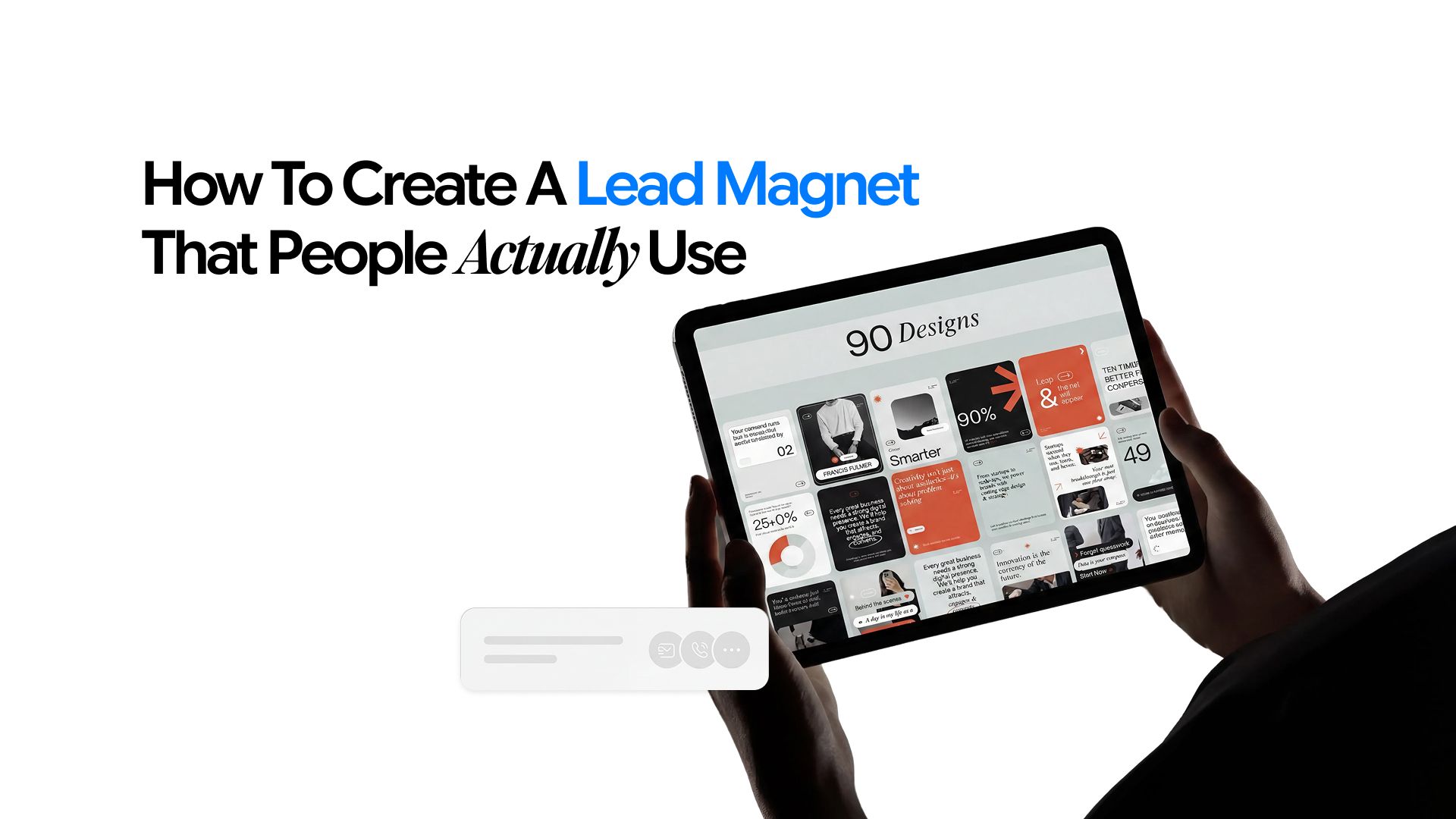
How to Create a Lead Magnet That People Actually Use
Most lead magnets get downloaded and immediately forgotten. Not because the topic was wrong, but because the execution was off. The offer was too broad, the content too dense, or the delivery too disconnected from what the reader actually needed at that moment.
A lead magnet is a free resource you offer in exchange for someone's contact information. Done well, it starts a relationship. Done poorly, it collects email addresses that never open another message from you.
This guide walks through the entire process, from choosing the right format to measuring whether your lead magnet is actually working.
Types of Lead Magnets (And Which One Fits Your Situation)
Before you build anything, you need to know what you are building and why. The format you choose determines how much effort your audience has to put in before they get value. The lower that effort, the higher your opt-in rate. The higher the relevance, the better the quality of leads you attract.
Here is a breakdown of the most effective formats and the situations they are best suited to.
1. Checklists and cheat sheets
These are the highest-converting format for most audiences. They deliver value in under five minutes and ask nothing from the reader except a quick scan.
They work best for action-oriented, time-poor audiences such as marketers, small business owners, and content creators. Use them when you want high opt-in volume and a low barrier to entry.
A checklist titled "10-Point Landing Page Audit Before You Launch" will almost always outperform a 30-page guide on the same topic.
2. Templates
They carry high perceived value because the reader gets something they can use immediately, without building from scratch. They perform especially well with SaaS users, designers, marketers, and operations teams.
A well-built template does not just save time, it demonstrates that you understand the reader's workflow. This format works at any funnel stage but performs strongest mid-funnel, when the reader already understands their problem and wants a faster path to solving it.
3. Ebooks and guides
These are the most widely used format and also the most misused. They work when the topic is narrow and the audience has genuine appetite for depth. They fail when they try to cover too much.
A focused 10-page guide on one specific problem will almost always outperform a sprawling 60-page manual. Best suited to audiences in research mode, such as B2B buyers, consultants, and professionals evaluating their options.
4. Whitepapers and research reports
They are the strongest format for B2B lead generation with longer buying cycles. Decision-makers respond to data, original research, and credible analysis. This format is best deployed mid-to-bottom funnel, when trust and authority matter more than volume. It is not the right choice for cold audiences or consumer-facing brands.
5. Slide decks and presentation guides
6. Webinars and video content
Webinars require the most effort to produce but also build the most trust. They work best when the topic benefits from live demonstration or explanation. Software products, coaching businesses, and professional service brands tend to see strong results here. Live webinars create urgency. Recorded versions extend the shelf life significantly.
7. Mini-courses and email sequences
These work best when your audience needs education before they are ready to buy. Value is delivered in installments over several days, which keeps your brand in the inbox consistently. This format suits coaching, education, and professional development niches where the gap between problem awareness and purchase readiness is wide.
The right format is not the one that sounds most impressive to produce. It is the one that matches where your audience is in their thinking. Understanding how different professionals consume and respond to content in different ways will sharpen that decision considerably before you move forward.
Step 1: Pick a Problem Worth Solving
The most common lead magnet mistake is picking a topic you want to write about instead of one your audience wants solved right now.
There is a meaningful difference between a topic that is interesting and one that is urgent. Interesting topics attract readers. Urgent problems attract leads. Your lead magnet needs to solve something your audience is actively searching for, not something adjacent to it.
The narrower the problem, the stronger the offer.
- "A Complete Guide to Social Media Marketing" is easy to ignore.
- "How to Plan 30 Days of Instagram Content in One Afternoon" is hard to scroll past.
Specificity signals that you understand the reader's exact situation, and that is what earns the opt-in.
To find the right problem, look at what your audience is already searching for. Forums, comment sections, search autocomplete suggestions, and competitor content all show you what questions are going unanswered. An AI search engine can surface exactly what your audience is asking right now, across multiple sources, far faster than manual research. Start there before you commit to a topic.
Step 2: Choose the Format That Matches Your Audience
With the types section above as your reference, this decision should be straightforward. The question to ask is simple: where is your audience in their thinking right now?
Cold audiences who have never heard of you need quick wins. Give them a checklist or a focused guide. Warm audiences who are already evaluating options can handle more depth. Give them a template, a whitepaper, or a detailed framework.
A practical rule of thumb:
- If your audience is primarily B2B decision-makers, lean toward templates, whitepapers, or slide decks.
- If they are B2C or SMB buyers, checklists and focused guides will pull better opt-in rates.
The best format is also the one you can execute well. A mediocre ebook delivered to the wrong audience converts nobody. A sharp one-page checklist delivered to exactly the right person converts consistently.
Step 3: Write a Title That Does the Work
Your title is the first thing a potential lead sees. If it does not communicate specific value in the first few words, they keep scrolling.
Specificity converts better than cleverness. Numbers, timeframes, and stated outcomes outperform vague promises every time. The reader should be able to answer "what's in it for me" before they finish reading the title.
Compare these two:
- Weak: "A Guide to Email Marketing"
- Strong: "The 5-Email Welcome Sequence That Turns New Subscribers into Paying Customers"
The second title names the format (a sequence), the scope (5 emails), the starting point (new subscribers), and the outcome (paying customers). Every word is doing a job. Before finalising your title, run it through one test: could your ideal reader look at this and immediately understand what they will have or be able to do once they consume it? If the answer is no, rewrite it.
Step 4: Build the Content Around One Quick Win
The most damaging structural mistake in lead magnet creation is trying to teach too much. Dense lead magnets feel like homework. They get downloaded, unopened, and eventually deleted.
The best lead magnets are snacks, not feasts. They solve one specific problem clearly and leave the reader feeling capable and confident, not overwhelmed. Your reader should be able to finish your lead magnet in a single sitting and walk away with something they can immediately apply.
A useful structure to follow:
- one problem
- one solution
- one clear next action.
Everything else is noise. If a section does not directly serve the reader's ability to solve the stated problem, cut it.
AI tools have changed how fast this process can move. What used to take days of outlining and drafting can now be structured in a fraction of the time. An AI document generator can take your topic and produce a structured draft you can shape and refine from there, which means the bottleneck shifts from production to editorial judgement.
That said, the draft is only the starting point. AI-generated content needs a human layer to build the trust that actually converts. Your specific examples, your audience's language, and your perspective on the problem are what make the content feel worth downloading. Do not skip that part.
Step 5: Design It to Look Like It's Worth Downloading
Presentation shapes perception. A poorly formatted lead magnet signals low effort, regardless of how good the content is. You do not need a professional designer, but you do need to look intentional.
Consistent brand colors, a readable font, and a clean layout are the baseline. Beyond that, the most important thing is visual hierarchy. The reader should be able to scan your lead magnet and immediately understand what is important and what to do with it.
For slide-based lead magnets such as pitch decks, presentation frameworks, or visual guides, structure and layout carry even more weight. The content and the design are inseparable in this format.
An AI presentation maker handles the layout and structure automatically, which means you can focus on the ideas rather than spending hours on formatting. This is particularly useful for B2B marketers who need professional-looking assets without a design team behind them.
One practical benchmark: your lead magnet should look like something a person would pay for. If it does not clear that bar visually, the perceived value drops before the reader reads a single word.
Step 6: Set Up the Delivery Experience
Getting someone to opt in is step one. What happens in the next five minutes determines whether they trust you or forget you.
The thank-you page should not be a dead end. Direct the reader somewhere with a clear next step, whether that is a relevant blog post, a short video, or a product page that connects naturally to what they just opted in for. This is where many marketers leave conversion on the table.
The delivery email should be short. Confirm delivery, name one specific thing the reader will get from the content, and leave them with a reason to open the next email. The goal is not to sell here. The goal is to set an expectation worth meeting.
Step 7: Promote It Where Your Audience Already Is
A lead magnet nobody sees converts nobody. Promotion is not a separate phase that comes after the build. It is part of the strategy from the beginning.
A checklist linked inside a blog post about landing page optimization will convert at a far higher rate than the same checklist promoted in a generic homepage pop-up.
Beyond blog posts, social media previews, website touch points, and paid ads all extend your reach. The key on social media is showing a visual preview of the lead magnet rather than just a text link. Perceived value needs to be communicated before the click, not after it.
Writing promotional copy for every channel individually takes time most marketers do not have. Understanding how professionals across industries are using AI chat to compress that kind of work will give you a practical sense of where the time savings actually come from before you start.
Step 8: Measure What Actually Matters
Download numbers are a vanity metric. A lead magnet with 500 downloads and no follow-up engagement is worth less than one with 80 downloads that consistently moves people into your funnel.
The three numbers that actually matter are your opt-in rate, your delivery email open rate, and your follow-up engagement rate. Opt-in rate tells you whether the offer and the landing page are working. Email open rate tells you whether the reader valued what they received. Follow-up engagement tells you whether those leads are moving anywhere useful.
If your numbers are flat, fix the title and the topic before you redesign anything. Most underperforming lead magnets fail at the offer level, not the design level.
Common Mistakes That Kill Lead Magnet Performance
Even well-intentioned lead magnets underperform when these mistakes slip through.
- The topic is too broad. An offer that tries to appeal to everyone ends up resonating with no one. The more specific your topic, the more a qualified lead feels like you made this for them.
- The content is too long. Length signals effort from the creator, not value to the reader. A dense 40-page guide that takes three hours to read will be consumed far less than a tight 6-page guide that delivers one clear outcome.
- The lead magnet and the product are misaligned. If your lead magnet attracts one type of audience but your product serves a different one, you will build a list that never converts. Every lead magnet should connect naturally to what you sell.
- There is no follow-up plan. The lead magnet opens the door. A nurture sequence keeps it open. Without follow-up emails, the relationship stalls the moment the download lands.
- It was built once and never revisited. A lead magnet referencing outdated tools, trends, or data signals stale thinking. Review your lead magnets at least once a year and update anything that no longer reflects current reality.
Start Building a Lead Magnet That Actually Works
A lead magnet works when it solves one specific problem, delivers that solution quickly, and connects naturally to what you sell. The format, the length, and the design all matter less than how precisely the offer matches what your reader needs at that exact moment.
The process itself is straightforward. Identify one problem your audience has this week. Pick the simplest format that solves it. Build it, deliver it, and follow up. That is the entire framework.
If you want to see how far AI can take the drafting, structuring, and promotional writing involved in that process, there are more ways to apply it than most people realise.
Frequently Asked Question
Attract target audiene and nurture long term relationships by mastering lead magnets.
More topics you may like
Why Document Creation Is Still Broken in 2026 — How AI Document Generators Are Fixing It

Faisal Saeed

AI Presentation Maker vs PowerPoint: Why the Old Way Is Costing You More Than You Think

Lucas Reinhardt
What are AI Presentation Makers? How Are They Making a Bigger Impact With Better Slides?

Maya Collins
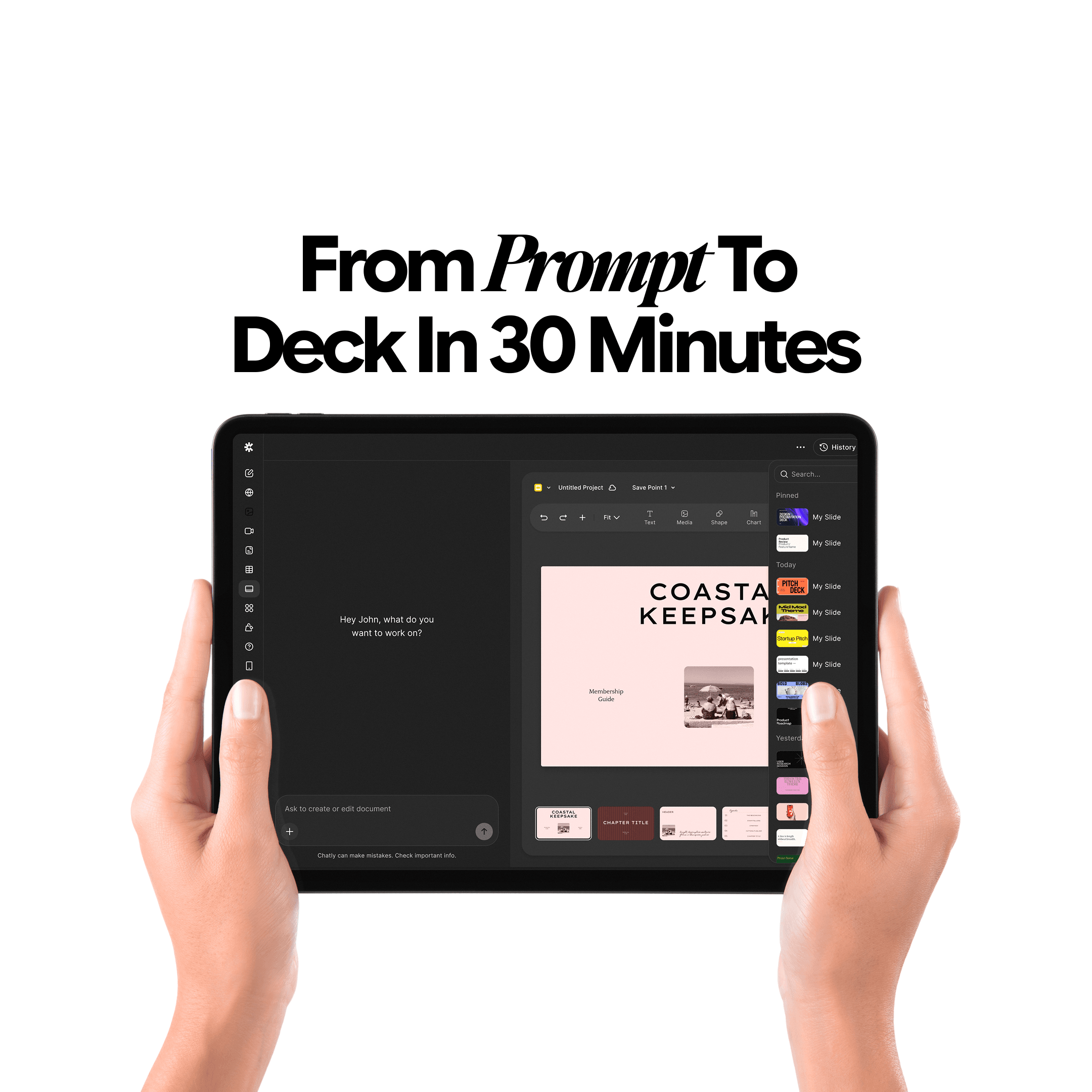
From Prompt to Deck in 30 Minutes – Winning AI Presentation Maker Workflow

Elena Foster

50+ Best AI Prompts for Business to Automise Your Tasks

Aqsa Nazir Kayani