What is Vibe Coding? The Future of Software Development
Have you ever found yourself stuck in a unique situation where traditional technology couldn't help you? Maybe you needed a custom tool to track your specific workflow, or an app tailored to your business needs that didn't exist in any app store.
You couldn’t do anything then, but now you can.
With advanced LLMs, traditional app builders have taken on a more comprehensive role. You can now sit at your laptop, describe the app you need to an AI in plain English, and within minutes, you will have a fully functional app complete with animations, data handling, and a polished interface.
You don’t have to write a single line of code.
Welcome to the world of vibe coding, where the barrier between imagination and implementation has become surprisingly thin.
But what exactly is vibe coding, and is it revolutionizing software development or setting us up for a maintenance nightmare? Let's dive deep into this fascinating phenomenon that's reshaping how we think about programming.
What is Vibe Coding?
Vibe coding represents a fundamental shift in how software gets built. At its core, it's a development approach where you describe what you want to an AI in natural language, and the AI generates working code based on your descriptions.
Instead of manually typing out functions, debugging syntax errors, and wrestling with documentation, you're having a conversation with an AI assistant that translates your intentions directly into functional software.
In practice, vibe coding involves an iterative loop:
- You describe what you want
- The AI generates code
- You test it and provide feedback
- You refine until you achieve the desired result
The developer's role transforms from code writer to product visionary and quality assurance tester. You're freed to focus on architecture, user experience, and business logic.
The beauty of vibe coding lies in its accessibility. A marketing professional can build a customer dashboard. A teacher can create custom learning tools. A small business owner can develop internal management systems.
The Origin Story
The term "vibe coding" was coined in February 2025 in a tweet by Andrej Karpathy, a prominent computer scientist who co-founded OpenAI and served as the AI leader at Tesla. In his description, Karpathy talked about "fully giving in to the vibes, embracing exponentials, and forgetting that the code even exists."
Karpathy had been using this approach to build prototypes like MenuGen, where he provided goals, examples, and feedback in natural language while letting AI handle all the code generation.
The term resonated instantly with developers worldwide because it captured something they were already experiencing but couldn't quite name.
It wasn't just "AI-assisted coding" or "pair programming with AI” but something more intuitive and experimental. The name stuck because it perfectly encapsulated the feel-based, iterative, trust-the-process nature of this new approach.
Vibe Coding vs. Traditional Programming
The differences between vibe coding and traditional programming run deeper than just how you input instructions. They represent fundamentally different mental models of software development.
Traditional Programming Approach:
- You're the architect, engineer, and construction worker all rolled into one
- You design the structure and write the implementation
- You hunt down bugs line by line
- You spend hours on boilerplate code that adds little value
- You need deep knowledge of programming languages, frameworks, and design patterns
- The learning curve is steep, and mastery takes years
Vibe Coding Approach:
- You become the creative director and quality assurance lead
- You describe high-level intent: "create a dashboard that shows sales trends"
- The AI handles syntax, imports libraries, and structures the code
- You focus on whether the output meets your requirements
- Technical barriers are significantly lowered
- Iteration happens rapidly: describe, generate, test, refine
The iteration cycles differ dramatically too.
Traditional development follows a write-compile-debug loop that can be frustratingly slow. Vibe coding operates on rapid experimentation. You might go through ten iterations in the time it would take to write the initial code traditionally.
However, this doesn't mean traditional skills become obsolete. Understanding programming concepts, system architecture, and software design remains valuable. Perhaps more valuable than ever. The difference is that you're applying these skills at a higher level of abstraction, guiding rather than implementing, architecting rather than assembling.
Best Tools for Vibe Coding in 2026
The vibe coding ecosystem has exploded over the past year, with dozens of tools competing for developers' attention. Each brings unique strengths to the table, and choosing the right one depends on your specific needs and workflow.
Claude by Anthropic
Claude stands out for its conversational approach and Artifacts feature, which creates live, interactive code right in your chat. It excels at explaining its reasoning and iterating on complex requirements. The Code Execution feature allows you to run and test code directly within the conversation.
Cursor
This tool has become the go-to choice for professional developers who want AI assistance without leaving their familiar development environment. This AI-powered code editor combines the power of large language models with a VS Code-like interface. It offers features like AI-powered code completion, chat-based editing, and codebase-wide context understanding.
GitHub Copilot
It integrates seamlessly into existing workflows, offering real-time code suggestions as you type. While not purely a vibe coding tool, its latest versions support more conversational interactions. It can generate substantial code blocks from natural language descriptions.
Replit AI
v0 by Vercel
It specializes in generating React components and full user interfaces from text descriptions. If you're building web applications with modern frameworks, v0 can dramatically accelerate your frontend development.
Chatly
Chatly has emerged as a versatile multi-model platform that gives developers access to multiple AI chat systems including GPT-5.2, Claude Opus 4.5, Gemini 3 Pro and others in a single interface. What makes Chatly particularly powerful for vibe coding is its flexibility. You can switch between different AI models depending on your task. This leverages each model's specific strengths for different coding challenges.
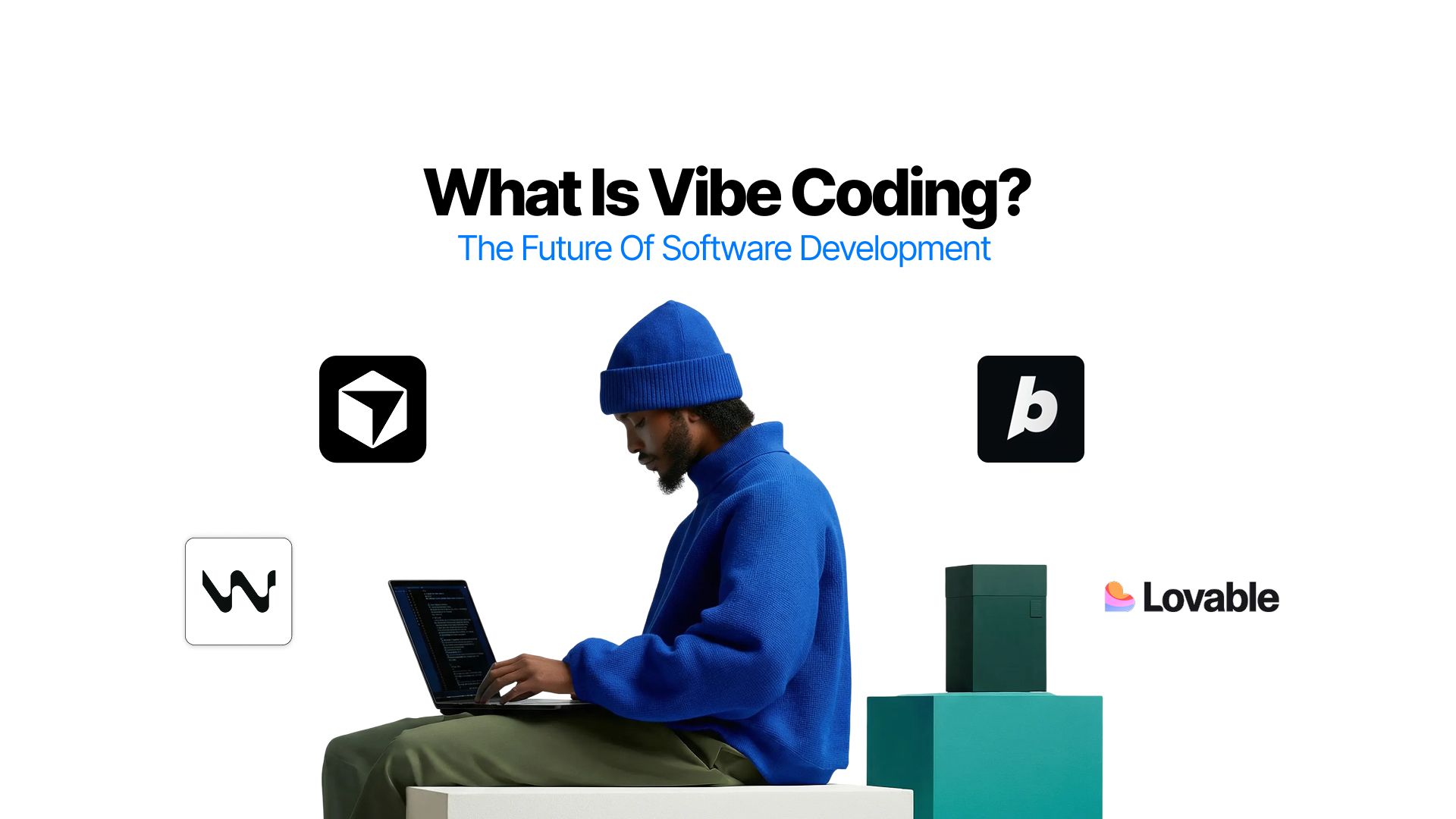
Other notable tools include Windsurf Editor by Codeium, which markets itself as an "agentic IDE" where human and AI collaboration flows naturally. Bolt.new and Lovable target the no-code/low-code space, allowing non-technical users to build functional applications through conversational interfaces.
How to Start Vibe Coding
Ready to try vibe coding yourself? Here's a practical roadmap to get started without getting overwhelmed.
Step 1: Choose Your First Tool
Start with an accessible platform like Claude, ChatGPT, or Chatly. These require no installation and let you experiment immediately through a web interface. Don't overthink this choice. You can always switch later.
Step 2: Start Small and Specific
Your first project should be something simple with a clear goal. Avoid ambitious projects initially. Start with a manageable project and scale from that as the success builds confidence.
Good starter projects include:
- A basic to-do list app
- A calculator with a user interface
- A simple data visualization from a CSV file
- A personal website with a few pages
- A random quote generator
- A temperature converter
Step 3: Master the Art of Prompting
Effective vibe coding hinges on clear communication and effective prompts. Be specific about requirements. Instead of "make a calculator," try "create a calculator web app with basic operations (add, subtract, multiply, divide), a clear button, and a modern, clean interface using HTML, CSS, and JavaScript."
Key prompting principles:
- Provide context about your environment and constraints
- Share examples of what you like or dislike
- Describe what you expected versus what happened
- Break complex requests into smaller steps
- Iterate incrementally rather than requesting everything at once
Step 4: Understand, Don't Just Copy
Read the generated code even if you don't plan to modify it manually. Try to understand the overall structure and main logic. This understanding helps you provide better feedback and catches potential issues early.
You're building your mental model of how things work. This becomes invaluable as you tackle more complex projects.
Step 5: Iterate and Refine
Treat your first generation as a starting point, not the final product. Test thoroughly, note what doesn't work or could be better, and ask for refinements.
Real vibe coding is conversational:
- "The button should be blue instead of green"
- "Add error handling for invalid inputs"
- "Make it responsive for mobile screens"
- "The animation feels too fast, slow it down"
Step 6: Build Complexity Gradually
Once you're comfortable with basic apps, gradually increase complexity. Add database integration, implement user authentication, or create multi-page applications. Each project teaches you what works well with vibe coding and where you need to provide more guidance.
Vibe Coding vs. Prompt Engineering
While vibe coding and prompt engineering both involve instructing AI through natural language, they serve different purposes and require different mindsets. Understanding the distinction helps you apply each approach more effectively.
Prompt Engineering focuses on:
- Crafting optimal inputs to get specific, high-quality outputs
- Precision and often formulaic structure
- Individual prompt perfection
- Techniques like few-shot examples and chain-of-thought reasoning
- Generating text, analysis, or completing discrete tasks
Vibe Coding focuses on:
- Building software through ongoing conversation
- Iterative development over multiple interactions
- Whether the generated code actually works
- Context that builds over time as you refine
- Creating functional applications, not just outputs
The skill sets overlap but differ in emphasis. Prompt engineering rewards precision and understanding of model limitations. Vibe coding rewards product thinking, testing ability, and knowing when to pivot or start over.
A prompt engineer might spend an hour crafting the perfect prompt. A vibe coder might generate ten versions in that time and pick the best one. Both approaches have merit depending on your goals.
That said, good prompt engineering skills absolutely enhance vibe coding. Clear, well-structured requests yield better initial code generation, reducing iteration cycles. Think of prompt engineering as a subset of skills within the broader vibe coding practice.
Safety and Reliability Concerns
The commonly asked question is whether you can deploy vibe-coded applications to production? The answer is nuanced and depends heavily on context.
For certain applications, vibe coding produces entirely production-worthy code. Internal tools, prototypes that evolve into products, content-heavy websites, and simple CRUD applications can be successfully built and deployed using vibe coding techniques. Many small businesses and startups are running production systems that started as AI-generated code.
However, several factors demand careful consideration:
- Code quality varies based on the AI model and your prompting skills
- AI-generated code might include security vulnerabilities
- The code structure might be harder to maintain as applications grow
- Performance optimization may not be optimal
- Edge cases might not be handled properly
The key to production success lies in hybrid approaches.
Generate code with AI, but then review it thoroughly. Run security scans and automated tests. Have experienced developers audit critical sections. This "vibe coding plus human oversight" model combines AI's speed with human judgment and expertise.
Best practices for production deployment:
- Always review authentication and authorization code manually
- Implement comprehensive testing (unit, integration, end-to-end)
- Use static analysis tools to catch security issues
- Document the architecture and key design decisions
- Establish code review processes even for AI-generated code
- Monitor performance metrics after deployment
- Plan for maintainability from the start
For mission-critical applications like financial systems, healthcare platforms, infrastructure tools, traditional development with AI assistance remains the safer approach. But for the vast majority of applications, vibe coding with proper safeguards can absolutely produce production-quality results.
Vibe Coding Hangover and Security Risks
Every new development approach has drawbacks, and vibe coding is no exception. The community has coined the term "vibe coding hangover" to describe the painful aftermath of rapid AI-assisted development without sufficient understanding or care.
Vibe Coding Hangover
A vibe coding hangover occurs when you return to code you vibe-coded weeks or months earlier and discover you can't understand, modify, or debug it. The code works, but it's a black box. You have no mental model of how components interact.
Common symptoms include:
- Inability to debug issues when they arise
- Difficulty adding new features to existing code
- Outdated dependencies you don't know how to update
- Convoluted structure that made sense to the AI but not to you
- Technical debt accumulated through quick "just make it work" iterations
Technical debt accumulates faster with vibe coding if you're not careful. Each quick iteration that "just works" might introduce slightly hacky solutions, inconsistent patterns, or inefficient implementations. Over time, these add up to a codebase that's brittle and hard to extend.
Security Risks
AI models can generate code with common vulnerabilities that work functionally but fail security best practices. A recent report by Escape analyzed 5600 publicly available applications and found more than 2,000 vulnerabilities, 400+ exposed secrets, and 175 instances of PII (Personally Identifiable Information).
Common security issues in AI-generated code:
- SQL injection vulnerabilities from improper query construction
- Weak input validation creating attack vectors
- Authentication mechanisms that can be bypassed
- API keys and secrets hardcoded in source code
- Unvetted dependencies that might contain malware
- Insufficient error handling exposing system information
- Cross-site scripting (XSS) vulnerabilities
- Lack of rate limiting on sensitive endpoints
AI doesn't inherently understand security best practices. It generates functional but potentially insecure code based on patterns in its training data.
This is why mitigation strategies are essential.
Never deploy without code review, especially for security-critical components. Use automated security scanning tools like Snyk, SonarQube, or OWASP ZAP. Understand the generated code at least at an architectural level.
Additional protective measures:
- Follow security best practices even when they're not explicitly generated
- Regularly audit deployed applications for vulnerabilities
- Keep dependencies updated and monitor for security advisories
- Implement logging and monitoring to detect unusual activity
- Use environment variables for sensitive configuration
- Apply the principle of least privilege to database access
- Maintain documentation explaining key decisions and system architecture
This documentation helps both current and future maintainers understand the system. The goal isn't to avoid vibe coding but to use it responsibly with appropriate safeguards in place.
Conclusion
Vibe coding represents a genuine paradigm shift in how software gets built, but it's not a wholesale replacement of traditional development. Rather, it's an expansion of the developer toolkit and a democratization of software creation.
The most successful approach treats vibe coding as a powerful accelerator enhanced by human expertise, not a substitute for understanding. Use AI to handle tedious implementation details, boilerplate code, and rapid prototyping. Apply human judgment for architecture, security review, and business logic.
For experienced developers, vibe coding offers a way to be dramatically more productive, building in hours what once took days. For aspiring developers, it provides a gentler on-ramp to creating software while learning fundamental concepts. For non-technical professionals, it enables building tools tailored to specific needs without depending entirely on development teams._
Frequently Asked Question
Start vibing with code through these online user queries.
More topics you may like
Claude Opus 4.5: The Definitive Guide to Features, Use Cases, Pricing

Faisal Saeed
Gemini 2.5 Pro vs Gemini 3 Pro: Cost Analysis
Faisal Saeed
Gemini 3 Pro Overview: Features, Pricing, and Use Cases
Faisal Saeed

GPT-5.2 Is Here: What Changed, Why It Matters, and Who Should Care
Faisal Saeed
50+ Ready-to-Copy, Battle-Tested System Prompts That Actually Work in 2025

Muhammad Bin Habib