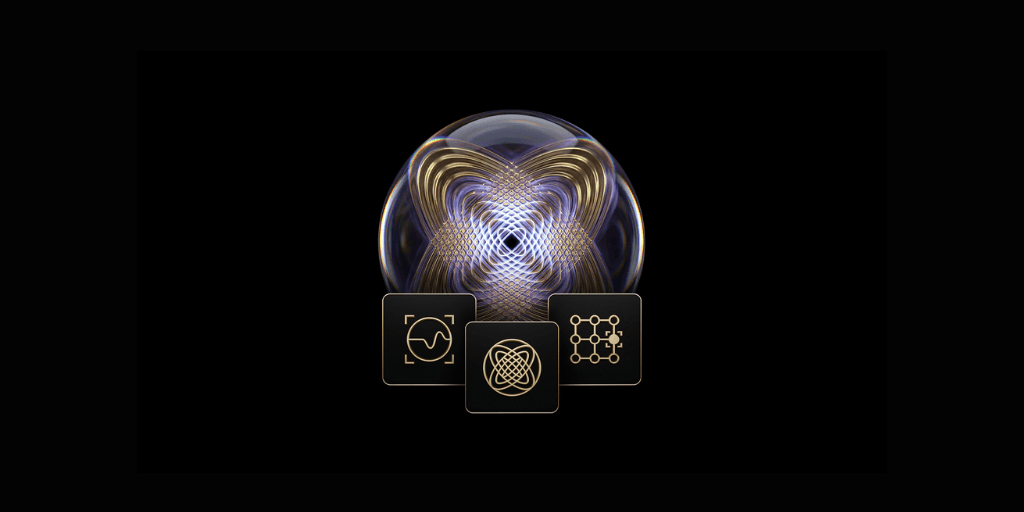
NVIDIA Launches “Ising”, the World's First Open AI Models for Quantum Computing
NVIDIA has launched NVIDIA Ising, the world's first family of open source AI models built to help researchers and enterprises develop quantum processors capable of running useful applications. The launch was made on April 14, internationally recognized as World Quantum Day, a date tied to 4.14, the opening digits of the Planck constant.
NVIDIA Ising includes two models targeting the two most critical engineering challenges in quantum computing:
- Ising Calibration: A vision language model that automates continuous calibration of quantum processors, cutting the time required from days to hours.
- Ising Decoding: Delivers quantum error correction up to 2.5x faster and 3x more accurate than pyMatching, the current open source industry standard.
NVIDIA CEO Jensen Huang said in the official announcement:
AI is essential to making quantum computing practical. With Ising, AI becomes the control plane, the operating system of quantum machines, transforming fragile qubits to scalable and reliable quantum-GPU systems.
Both models are already in active use. Ising Calibration has been adopted by:
- Academia Sinica
- Fermi National Accelerator Laboratory
- Harvard John A. Paulson School of Engineering and Applied Sciences
- Infleqtion
- IonQ
- IQM Quantum Computers
- Lawrence Berkeley National Laboratory's Advanced Quantum Testbed
- U.K. National Physical Laboratory
Ising Decoding is being deployed by:
- Cornell University
- Sandia National Laboratories
- University of Chicago
- UC Santa Barbara
- University of California, San Diego
- University of Southern California
- Yonsei University
NVIDIA Ising integrates with the NVIDIA CUDA-Q software platform for hybrid quantum-classical computing and the NVIDIA NVQLink QPU-GPU hardware interconnect for real-time control and error correction. The models can run locally on researchers' own systems, keeping proprietary data on-premises. NVIDIA is also providing a cookbook of quantum computing workflows and training data alongside NVIDIA NIM microservices, letting developers fine-tune models for specific hardware with minimal setup.
CNBC reported that shares of IonQ and D-Wave Quantum climbed as much as 50% in the week following the launch, while Quantum Computing and Rigetti Computing posted gains exceeding 20%. The quantum computing market is expected to surpass $11 billion by 2030, according to analyst firm Resonance.
Also Read
- Anthropic Launched Claude Opus 4.5 — New Flagship Model for Coding and Complex AI Workflows
- Anthropic Launches Claude AI Agent Inside Chrome
- Microsoft Copilot Adds Multi-Model AI Comparison
- OpenAI Closes Record $122 Billion Funding Round at $852 Billion Valuation
- OpenAI Launches AI-Powered Browser ChatGPT Atlas to Redefine Web Use
- Trump Says Meta's Louisiana AI Data Center to Cost $50B
- Google Launches Gemma 4, Its Most Capable Open Model Family
- Salesforce Turns Slackbot Into a Full Enterprise AI Agent With 30 New Capabilities
Frequently Asked Questions
Common Questions About NVIDIA's First Open AI Models for Quantum Computing
More topics you may like
Anthropic Launched Claude Opus 4.5 — New Flagship Model for Coding and Complex AI Workflows

Faisal Saeed
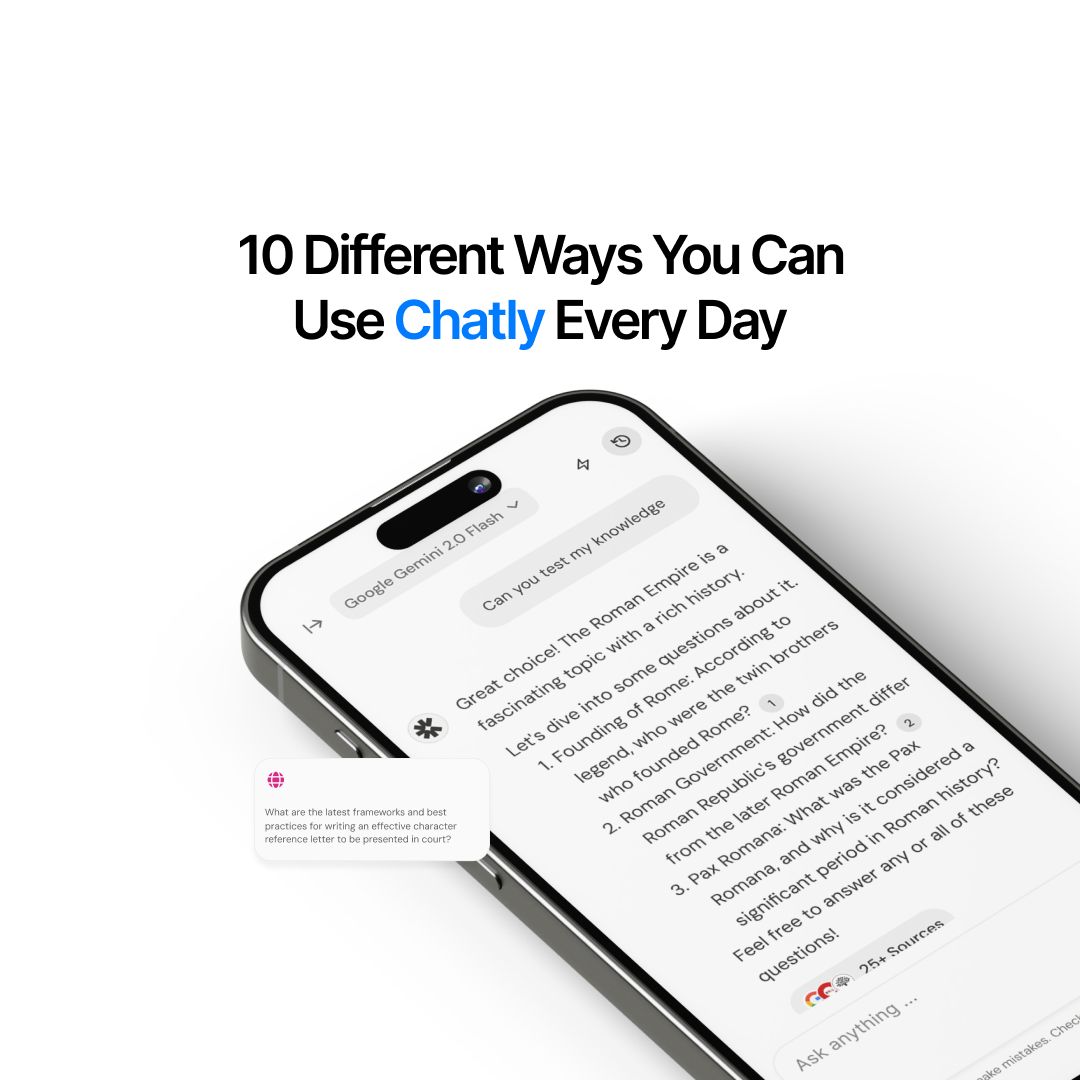
10 Different Ways You Can Use Chatly AI Chat and Search Every Day
Faisal Saeed

Best AI Search Engines for 2026: A Comprehensive Guide
Faisal Saeed
GPT-5.4: OpenAI's First Truly Unified Frontier Model

Lucas Reinhardt