
AI physics solver with step-by-step answers
Type the problem or upload a photo and get the working, step by step.
Examples
Three things people make with it.
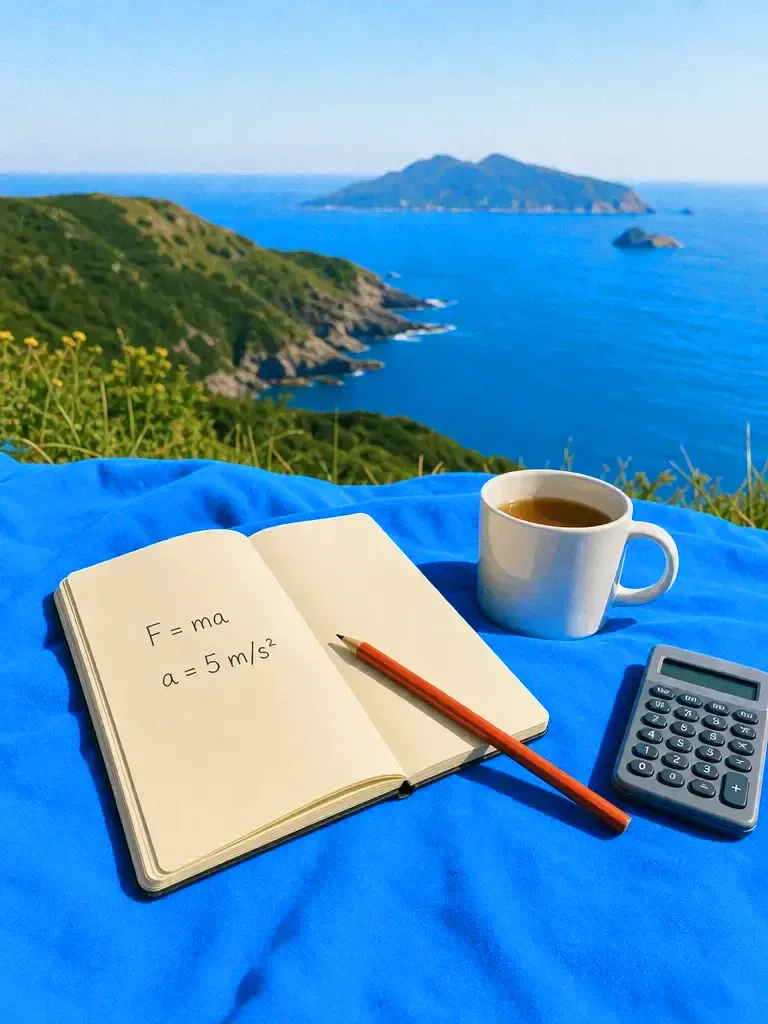
Step by step 
Free-body diagram 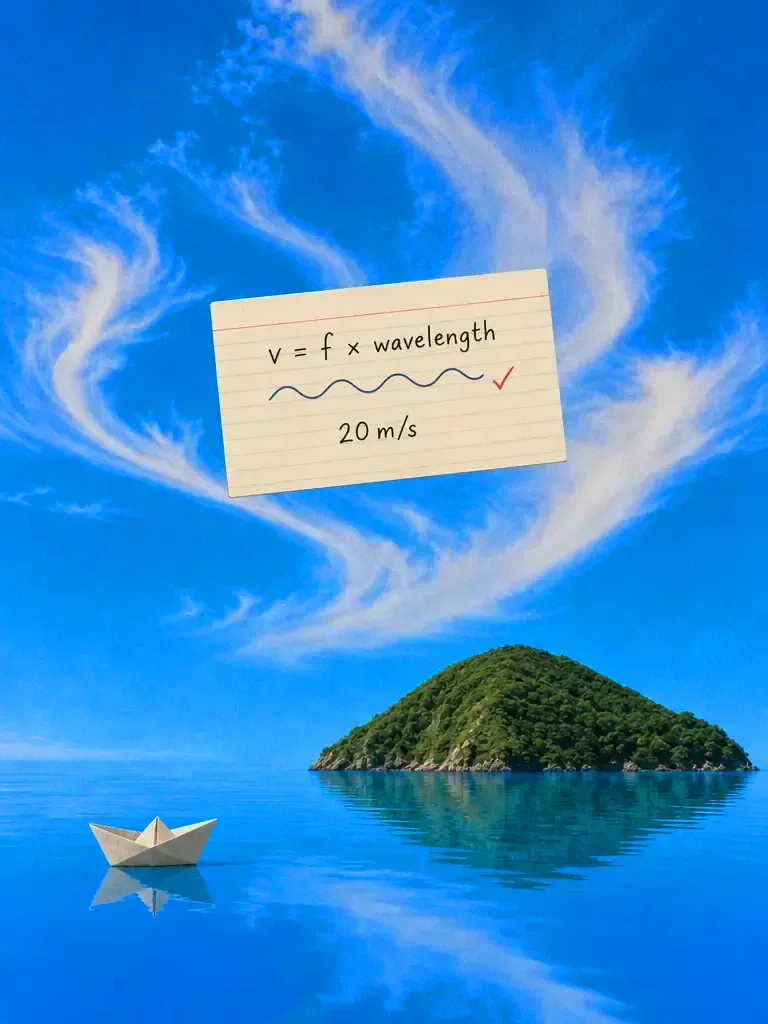
Wave speed
How it works

Enter your problem
Paste the question, type it in plain language, or upload a photo or a PDF page.

Get the solution
The solver picks the relevant laws and formulas, lists what is known and works through the solution.

Review and go deeper
Study the steps, ask for another approach, or ask a follow-up about any line.
Features
Plain-languageinput
Learn more about plain-language inputKnown andunknown, listed
Learn more about known and unknown, listedUnitschecked
Learn more about units checkedPhotosand PDFs
Learn more about photos and pdfsFollow-upquestions
Learn more about follow-up questionsMore than25 models
Learn more about more than 25 models
Who it’s for
Homework and problem sets
Check your working and see where a solution went off track.
Exam revision
Work through motion, forces, energy, waves and heat with worked examples.
Understanding a concept
Ask for the idea behind a law in plain words, then see it applied to a number.
Example problems and solutions
Five problems with a short sample of the solution. Real solutions show more steps and vary by model.
- Kinematics: a car accelerates from rest at 3 m/s² for 5 s. How far does it travel?
- s = ½at² = ½ × 3 × 5² = 37.5 m.
- Force: a 2 kg object is pushed with a 10 N net force. What is its acceleration?
- a = F ÷ m = 10 ÷ 2 = 5 m/s².
- Energy: the kinetic energy of a 1,000 kg car at 20 m/s
- KE = ½mv² = ½ × 1,000 × 20² = 200,000 J, or 200 kJ.
- Waves: the speed of a wave with frequency 50 Hz and wavelength 0.4 m
- v = fλ = 50 × 0.4 = 20 m/s.
- Heat: the energy to warm 0.5 kg of water by 20 °C (c = 4,200 J/kg·°C)
- Q = mcΔT = 0.5 × 4,200 × 20 = 42,000 J.
A method that works for most problems
Write down what you know and what you need, with units. Then pick the law that connects them, rearrange it for the unknown, and only then put in numbers. The solver follows the same order, which is why its working is easy to compare with yours.
Check the answer three ways. Are the units right? Is the size sensible, for example a car does not accelerate at 500 m/s²? Does it change the way you expect if you change an input? These checks catch most slips.
When you are stuck, say where. Tell the solver which step you do not follow and ask it to explain that step with a simpler example.
Solving from a photo or a PDF
Take the photo with the whole problem in frame and the page flat, including any diagram and the given values. If the problem depends on a figure, mention what the figure shows, because the solver reads the text and the picture together.
Units and the mistakes they catch
Most wrong answers in physics come from units. Mixing kilometres per hour with metres per second, or grams with kilograms, changes the result by a large factor. Convert to standard units first, carry them through each line, and check that the final unit is the one you expected.
A second common slip is using the wrong formula for the situation. The equations for constant acceleration do not apply when the acceleration changes, so ask the solver why it chose a formula, and what has to be true for it to apply.
A third is ignoring direction. Velocity, force and acceleration have a direction as well as a size, so choose a positive direction and keep to it. If your answer comes out negative, that usually means the motion is in the opposite direction, not that you made an error.
Frequently asked questions
Is the AI physics solver free?
You can start for free. Paid plans add credits and features. Standard is $20 a month, or less when you pay quarterly or yearly.
Does it show every step?
Yes. It lists the known values, names the formula, and shows each step with units, and you can ask it to explain any line.
Can I upload a photo of the problem?
Yes. Upload a photo of a textbook or handwritten problem, or a page from a PDF. If something is unclear, the solver asks you to confirm.
Which topics does it cover?
Motion and kinematics, forces, energy and work, waves and optics, electromagnetism, and heat transfer, at school and early university level.
How accurate is it?
It is usually right on standard problems, but any AI can slip on arithmetic or units. Check the units and the order of magnitude, and ask the solver to verify its answer.
One prompt in.
Real work out.
Type the problem or upload a photo and get the working, step by step.
Chatly on your Mac
Chatly for Mac
Every model on your desktop, with the files and screenshots you already have to hand.
Download for macOS