
AI chemistry solver with every step shown
Balance equations and solve problems with every step explained.
Examples
Three things people make with it.

Balance it 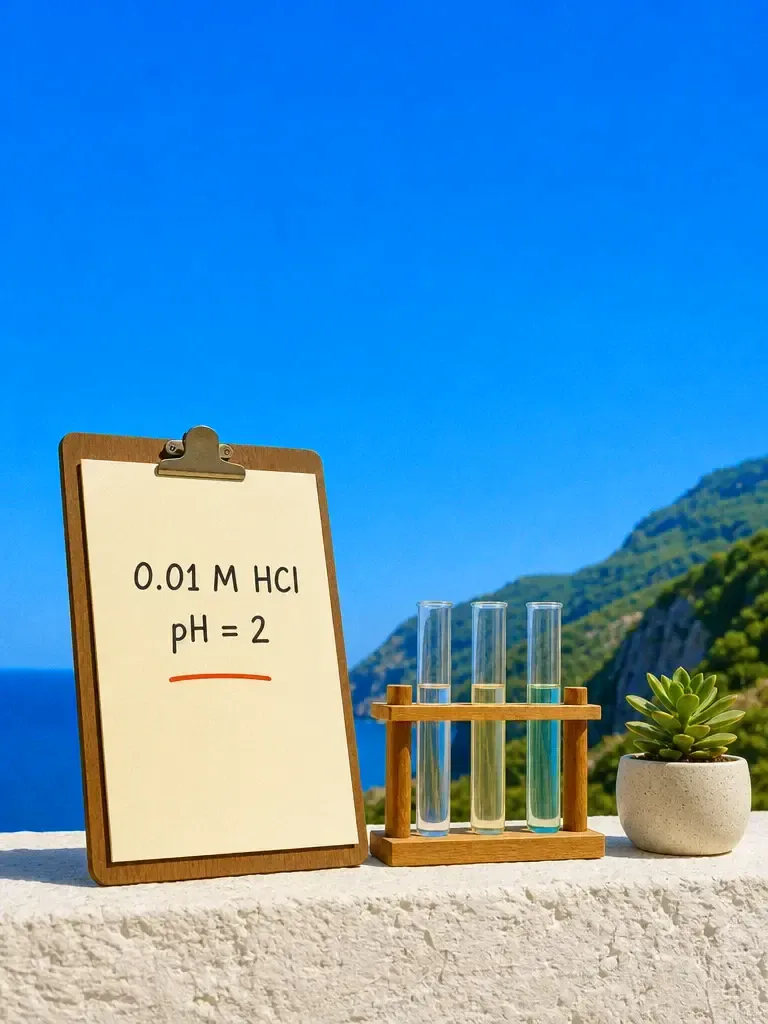
Find the pH 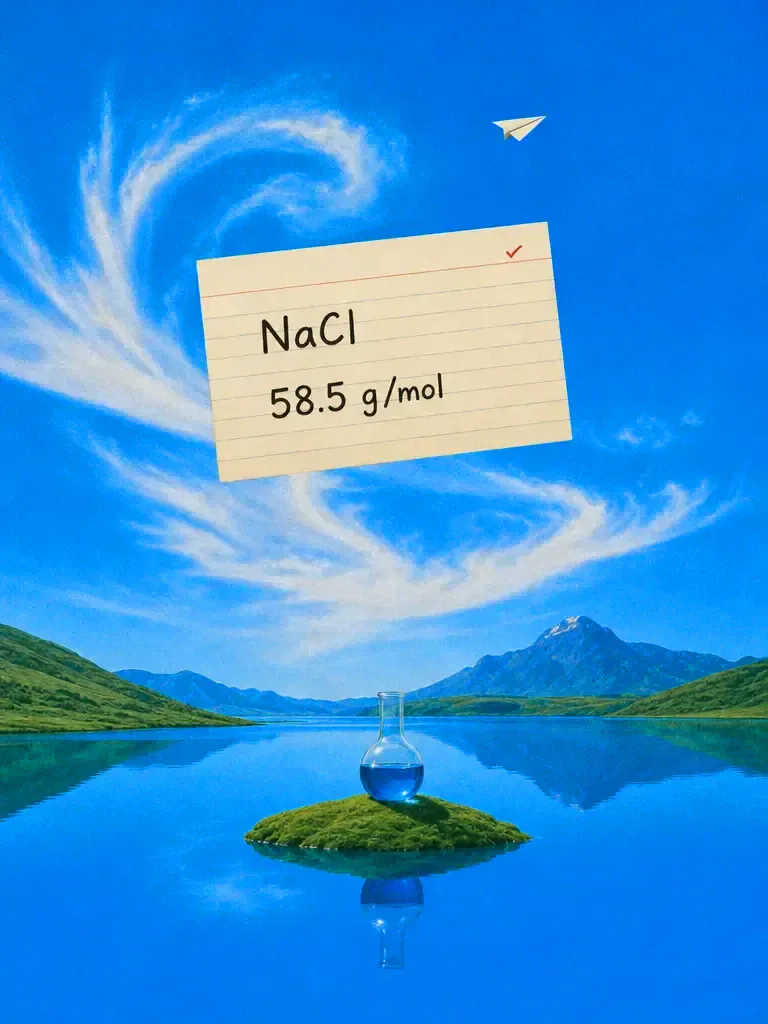
Molar mass
How it works

Enter your question
Type or paste the problem, or upload a photo of a handwritten or printed one. Equations, word problems and organic reactions all work.

Let the solver work
It identifies the relevant formulas and works through the solution step by step.

Review and use the solution
Read the method as well as the answer, then ask a follow-up about any step.
Features
Balancesequations
Learn more about balances equationsStoichiometry
Learn more about stoichiometryAcid-baseproblems
Learn more about acid-base problemsOrganic andgeneral chemistry
Learn more about organic and general chemistryText orphoto input
Learn more about text or photo inputFollow-upquestions
Learn more about follow-up questions
Who it’s for
Homework and lab reports
Check calculations and see where a solution went wrong.
Exam revision
Practise balancing, moles and pH with worked examples, then try your own.
Understanding reactions
Ask for the idea behind a reaction type in plain words, then see it applied.
Example problems and solutions
Five problems with a short sample of the solution. Real solutions show more steps and vary by model.
- Balance: H₂ + O₂ → H₂O
- Balance the oxygen first: 2H₂ + O₂ → 2H₂O, with four hydrogen and two oxygen atoms on each side.
- Moles: how many moles are in 18 g of water?
- The molar mass of water is about 18 g/mol, so 18 g is 1 mol.
- pH: the pH of 0.01 M hydrochloric acid
- HCl is a strong acid, so [H⁺] = 0.01 M and pH = −log(0.01) = 2.
- Mass: the mass of CO₂ from burning 12 g of carbon (C + O₂ → CO₂)
- 12 g of carbon is 1 mol, which makes 1 mol of CO₂, so the mass is 44 g.
- Molar mass: sodium chloride, NaCl
- Sodium is about 23 and chlorine about 35.5, so NaCl is about 58.5 g/mol.
A method for stoichiometry
Start with a balanced equation, because the coefficients are the ratios everything else uses. Convert the given mass to moles, use the ratio from the equation to find the moles you want, then convert back to grams or litres.
Write the units at every step. If grams cancel and moles cancel in the right places, the setup is probably right. If they do not, the setup is wrong, and that is quicker to spot than a wrong number.
Check the answer for sense. Does the product's mass make sense next to the reactant's? Is a pH in the right range for a strong or weak acid? Ask the solver to verify by a second route if you are unsure.
Solving from a photo
Photograph the whole problem with the page flat and in good light. Chemical formulas rely on small subscripts and charges, so check that the solver has read them correctly. If it asks you to confirm a symbol, answer before you trust the result.
Mistakes the solver helps you catch
An unbalanced equation breaks everything that follows, because the coefficients are the ratios you use. Check that each element has the same number of atoms on both sides before you do any calculation.
Mixing up grams and moles is the next most common slip. Convert the mass to moles with the molar mass first, work in moles, and convert back at the end. Writing the units at each step shows quickly where a conversion is missing.
Significant figures and the limiting reagent are easy to forget. Ask the solver which reactant runs out first, and to give the answer to the right number of significant figures for the data in the question.
Frequently asked questions
Is the AI chemistry solver free?
You can start for free. Paid plans add credits and features. Standard is $20 a month, or less when you pay quarterly or yearly.
Does it show every step?
Yes. It names the formulas it uses and shows each step with units, and you can ask it to explain any line.
Can I upload a photo of the problem?
Yes. Upload a photo of a handwritten or printed problem. If something is unclear, such as a subscript, the solver asks you to confirm what it read.
Which topics does it cover?
General, organic, physical, analytical and inorganic chemistry, including equation balancing, stoichiometry, thermodynamics, acid-base chemistry and bonding.
How accurate is it?
It is usually right on standard problems, but any AI can slip on arithmetic or molar masses. Check the units and the molar masses, and ask the solver to verify its answer.
One prompt in.
Real work out.
Balance equations and solve problems with every step explained.
Chatly on your Mac
Chatly for Mac
Every model on your desktop, with the files and screenshots you already have to hand.
Download for macOS