How to Effectively Plan Travel Itineraries Using AI Chat? Complete Guide to Intelligent Trip Planning
In the pre-AI era, travel planning used to mean drowning in browser tabs, conflicting reviews, and endless spreadsheets. Those days are over.
The AI travel planner revolution has arrived, and it's changing how we discover, plan, and experience travel in ways that seemed impossible just a few years ago.
Modern travelers are now discovering that travel AI planner systems save time as well as unlock travel experiences you never knew existed.
These intelligent systems analyze millions of data points (which is obviously more than a human), understand your preferences better than you do, and create personalized itineraries that traditional planning methods simply can't match.
Using AI chat for travel planning represents the next evolution in how we approach trips.
Instead of spending weeks researching destinations, you can have conversations with intelligent systems like Chatly (with multi-model access within one window, with AI search capabilities) that understand context, preferences, and real-time conditions to craft perfect travel experiences.
Before we dive deep, here are few key ways AI chat can transform your travel itinerary planning that are quicker, faster and easily manageable:
-
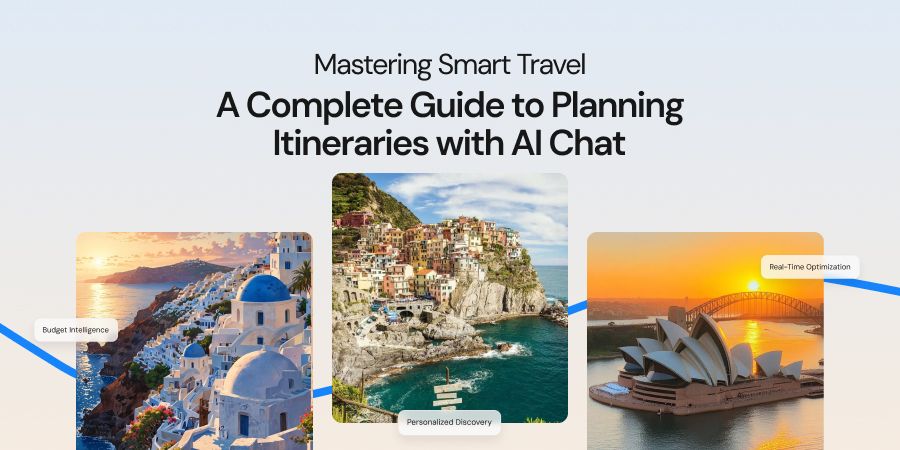
Real-Time Optimization - Adjust plans instantly based on weather, events, and availability
-
Budget Intelligence - Maximize experiences within your budget through smart recommendations
-
Time Efficiency - Transform weeks of research into hours of strategic planning
How to Use AI Chat for Travel Itinerary Planning: 7 Proven Methods
Everyone is using AI these days. Be it education, research, strategies, leisure chats or more, AI has truly revolutionized how we approached technology. What AI has also transformed is travel planning, making it easier and more efficient than ever before.
Today, we explore seven proven methods for leveraging AI chat to streamline your travel itinerary planning.
Method 1: Conversational Trip Discovery and Brainstorming
Start your travel planning with open-ended conversations that help AI travel planner systems understand your travel personality. Instead of searching generic destination lists, engage AI chat in exploratory discussions about your ideal travel experience.
Step-by-Step Discovery Process:
Start with Your Travel Identity: Begin by describing your travel personality rather than asking for destinations. This helps AI understand your core preferences before suggesting locations.
Effective Discovery Questions:
-
"I love food, culture, and mild adventure but hate crowds. Where should I travel in September?"
-
"Find me destinations similar to Prague but less touristy and more affordable"
-
"I have 10 days, $3000, and want to experience something completely different from city life"
-
"Suggest places perfect for digital nomads with great coffee culture and reliable internet"
Advanced Discovery Techniques:
-
Negative Preference Mapping: "I want adventure travel but nothing involving heights or water sports"
-
Inspiration-Based Queries: "I loved the night markets in Thailand and street art in Berlin. What destinations combine both?"
-
Lifestyle Integration: "Find places where I can work remotely while experiencing amazing local culture"
-
Seasonal Optimization: "Where can I escape winter and experience spring weather in February?"
Follow-Up Conversation Flow: After initial suggestions, drill deeper with specific follow-up questions:
-
"What makes [suggested destination] unique compared to similar places?"
-
"What would a typical day look like there for someone with my interests?"
-
"What should I know about traveling there that guidebooks don't mention?"
This conversational approach reveals destinations you'd never find through traditional search methods. AI chat systems excel at connecting abstract preferences with specific locations, creating personalized discovery experiences that feel almost magical.
Method 2: Dynamic Itinerary Generation Based on Constraints
Use travel planner AI platforms/models to create detailed itineraries that optimize for your specific constraints and preferences. AI chat excels at balancing multiple variables simultaneously to create realistic, actionable travel plans.
Constraint Definition Framework:
Essential Constraints to Specify:
-
Time Parameters: Exact dates, duration, flexibility for extensions
-
Budget Breakdown: Total budget, spending preferences (luxury accommodation vs. experiences)
-
Physical Limitations: Mobility requirements, health considerations, energy levels
-
Group Dynamics: Ages, interests, and constraints of all travelers
-
Travel Style: Fast-paced exploration vs. slow travel immersion
Constraint-Based Planning Examples Using Specific Prompts:
-
Time-Limited Business Trips:
-
First input: "Create a 48-hour Berlin itinerary focusing on history and local food, with meetings downtown Tuesday and Wednesday"
-
Follow-up: "Prioritize walking-distance activities and suggest backup indoor options for each outdoor plan"
-
-
Family Travel with Mixed Ages:
-
First input: "Plan 5 days in Costa Rica for 2 adults and 2 kids (ages 8 and 12) with mix of adventure and relaxation"
-
Refinement: "Include activities where parents can participate with kids, plus some adult-only evening options"
-
-
Budget-Conscious Extended Travel:
-
First input: "Design a 2-week Southeast Asia trip for under $1500 including flights from NYC"
-
Optimization: "Show me where to splurge for maximum impact and where to save without sacrificing experience"
-
-
Accessibility-Focused Travel:
-
First input: "Plan accessible Rome itinerary for a wheelchair user interested in art and architecture"
-
Specification: "Include transportation options, accessible entrances, and rest areas for each recommended site"
-
Pro Tips for Constraint-Based Planning:
-
Priority Ranking: Tell AI which constraints are non-negotiable vs. flexible
-
Trade-Off Analysis: Ask "What would I gain/lose if I adjusted [specific constraint]?"
-
Scenario Planning: Request multiple versions for different constraint combinations
The best AI travel planner systems understand these constraints aren't limitations and treat them as creative parameters that lead to more focused, enjoyable travel experiences.
Method 3: Real-Time Trip Optimization and Problem-Solving
Leverage AI for trip planning during your actual travels for real-time optimization and problem-solving. Smart travelers use AI chat as a virtual travel companion that adapts to changing conditions and unexpected opportunities.
Real-Time Problem-Solving Framework:
Immediate Situation Assessment:
-
Current Location and Conditions: Precise location, weather, time constraints
-
Available Resources: Transportation options, budget remaining, energy levels
-
Flexibility Parameters: What parts of the plan can be adjusted vs. fixed commitments
Real-Time Optimization Scenarios:
-
Weather Disruption Management:
-
Problem: "It's raining in Barcelona today. Suggest indoor alternatives to our planned park visits"
-
Strategic Follow-up: "Can you reorganize our 3-day itinerary to do outdoor activities tomorrow when weather improves?"
-
Resource Check: "What indoor activities near our hotel don't require advance booking?"
-
-
Transportation Crisis Response:
-
Problem: "My train to Florence is delayed 3 hours. How should I adjust my itinerary?"
-
Immediate Action: "What can I see/do in [current city] for 3 hours with my luggage?"
-
Cascade Planning: "How does this delay affect my Florence hotel check-in and dinner reservation?"
-
-
Spontaneous Opportunity Integration:
-
Opportunity: "I just met locals who invited me to a festival tomorrow. How can I modify my Rome plans?"
-
Strategic Assessment: "What would I miss by attending this festival, and how important is that compared to this cultural experience?"
-
Logistics Planning: "What preparations do I need for this festival, and where can I get them?"
-
-
Energy and Mood Management:
-
Situation: "We're exhausted after 4 days in Tokyo. Suggest relaxing activities for tomorrow"
-
Recovery Planning: "Design a low-energy day that still feels like meaningful travel"
-
Momentum Building: "How can we gradually build back to higher energy activities?"
-
Advanced Real-Time Strategies:
-
Contingency Activation: "My Plan B for today isn't working either. What's Plan C?"
-
Local Intel Integration: "I heard about [local event/place] from someone here. How does this fit with my interests?"
-
Time Optimization: "I have 2 unexpected free hours. What's the best use of this time given my location and interests?"
This adaptive planning capability transforms rigid itineraries into fluid, responsive travel experiences that maximize satisfaction regardless of circumstances.
Method 4: Hyper-Local Experience Curation
Use travel AI planner systems to discover authentic local experiences that guidebooks miss. AI chat excels at surfacing current, authentic recommendations based on local insights and real-time data.
Local Experience Discovery Framework:
Authenticity Criteria Definition:
-
Local Frequency: Places locals visit regularly vs. tourist attractions
-
Cultural Significance: Experiences that reflect genuine local culture
-
Seasonal Relevance: Activities tied to current local seasons or events
-
Economic Impact: Experiences that benefit local communities directly
Local Experience Discovery Categories:
-
Neighborhood Deep-Dives:
-
Query: "Show me the most authentic neighborhoods in Istanbul where locals actually live and eat"
-
Refinement: "Focus on neighborhoods with traditional markets, family restaurants, and minimal tourist infrastructure"
-
Practical Follow-up: "How do I respectfully explore these areas as a visitor?"
-
-
Seasonal and Temporal Specialties:
-
Query: "What unique experiences are available in Kyoto during cherry blossom season that tourists usually miss?"
-
Insider Focus: "Where do Kyoto residents go for hanami that isn't crowded with tourists?"
-
Timing Optimization: "What times of day offer the best local experiences during this season?"
-
-
Cultural Immersion Opportunities:
-
Query: "Find cooking classes, workshops, or volunteer opportunities in Mumbai for cultural exchange"
-
Community Integration: "Which opportunities allow meaningful interaction with local families or communities?"
-
Skill Development: "What can I learn here that I can't learn anywhere else in the world?"
-
-
Hidden Gems and Off-Path Attractions:
-
Query: "Recommend off-the-beaten-path attractions in Patagonia for photography enthusiasts"
-
Access Planning: "How do I reach these locations responsibly without a tour group?"
-
Equipment Considerations: "What photography equipment or preparations are essential for these locations?"
-
Advanced Local Curation Techniques:
-
Cross-Reference Validation: "How do I verify these recommendations are still current and authentic?"
-
Cultural Sensitivity Planning: "What local customs should I understand before participating in these experiences?"
-
Economic Consciousness: "How can I ensure my participation benefits the local community?"
The AI travel planner free approach often reveals experiences more valuable than expensive tourist attractions, creating memories that last far beyond typical vacation highlights.
Method 5: Multi-Destination Route Optimization
Complex multi-destination trips become manageable with trip planner AI systems that optimize routes, timing, and logistics across multiple locations. AI chat handles the complexity while you focus on the excitement.
Multi-Destination Planning Framework:
Route Optimization Variables:
-
Transportation Efficiency: Time and cost optimization for connections
-
Seasonal Considerations: Best timing for each destination's weather and events
-
Logical Flow: Geographic and cultural progression that enhances the experience
-
Fatigue Management: Pacing that prevents burnout and maximizes enjoyment
Multi-Destination Planning Examples:
-
European Grand Tour Optimization:
-
Initial Request: "Plan 3 weeks across 8 European cities optimizing for train travel and cultural diversity"
-
Logistics Refinement: "Arrange cities to minimize backtracking while maximizing train travel experiences"
-
Cultural Flow: "Order destinations to create a logical cultural and historical progression"
-
Practical Considerations: "Factor in laundry days, rest days, and time for spontaneous discoveries"
-
-
Island Hopping Coordination:
-
Base Request: "Design Greek island itinerary visiting 5 islands in 2 weeks with ferry schedules and accommodation"
-
Ferry Integration: "Optimize around actual ferry schedules and seasonal route availability"
-
Island Characteristics: "Balance party islands, cultural sites, and relaxation destinations"
-
Weather Contingency: "Build flexibility for weather-dependent ferry cancellations"
-
-
Road Trip Route Planning:
-
Journey Design: "Create Pacific Coast Highway road trip with optimal stops for photography and local food"
-
Scenic Timing: "Schedule driving times for optimal lighting and traffic conditions"
-
Discovery Balance: "Mix planned stops with flexibility for spontaneous roadside discoveries"
-
Accommodation Strategy: "Balance advance booking with flexibility for extending stays in favorite places"
-
-
Business and Leisure Integration:
-
Complex Scheduling: "Combine business meetings in London, Paris, and Berlin with weekend leisure activities"
-
Efficiency Optimization: "Minimize travel time between business obligations while maximizing leisure opportunities"
-
Cultural Immersion: "Suggest business networking opportunities that also provide cultural experiences"
-
Stress Management: "Build in recovery time between intense business periods"
-
Advanced Multi-Destination Strategies:
-
Flexibility Zones: "Where in this itinerary can I build flexibility for extending stays or changing plans?"
-
Transportation Alternatives: "What are backup transportation options if primary plans fail?"
-
Cultural Preparation: "How should I prepare differently for each destination's cultural context?"
-
Resource Management: "How do I manage luggage, laundry, and supplies across multiple destinations?"
Smart travel itinerary generator systems consider transportation schedules, seasonal factors, and logical flow to create seamless multi-destination experiences.
Method 6: Budget Optimization and Value Maximization
Transform budget constraints into strategic advantages using AI itinerary generator systems that maximize experiences per dollar spent. AI chat helps you spend smarter, not necessarily less.
Budget Optimization Framework:
Value-Based Budget Allocation:
-
Experience Prioritization: Identify which experiences justify higher spending
-
Timing Optimization: When to book for best prices without sacrificing quality
-
Alternative Strategy: Comparable experiences at different price points
-
Hidden Cost Identification: Anticipating and planning for unexpected expenses
Budget Optimization Strategies:
-
Value Timing Analysis:
-
Strategic Query: "When are the cheapest times to visit New Zealand without sacrificing experience quality?"
-
Seasonal Trade-offs: "What experiences are better/worse during shoulder seasons?"
-
Booking Timeline: "When should I book flights, accommodation, and activities for optimal pricing?"
-
Weather Risk Assessment: "How much weather risk am I accepting for cost savings?"
-
-
Alternative Destination Discovery:
-
Cost Comparison: "Find destinations offering similar experiences to Switzerland at 50% the cost"
-
Experience Matching: "What specific experiences make these alternatives comparable?"
-
Quality Assessment: "Where might I notice the difference, and where won't I?"
-
Cultural Considerations: "How do these alternatives differ culturally from my original choice?"
-
-
Spending Allocation Optimization:
-
Budget Strategy: "Optimize my $2000 Japan budget between accommodation, food, transportation, and activities"
-
Priority-Based Allocation: "I care most about food experiences. How should this influence my spending distribution?"
-
Upgrade Opportunities: "Where can small budget increases create disproportionate experience improvements?"
-
Savings Identification: "Where can I save money without impacting experience quality?"
-
-
Free and Low-Cost Experience Discovery:
-
Value Hunting: "Find amazing free activities and experiences in expensive cities like Copenhagen"
-
Local Integration: "What do locals do for entertainment that doesn't cost much?"
-
Cultural Immersion: "How can I experience local culture without spending on tourist attractions?"
-
Seasonal Opportunities: "What free events or experiences are happening during my visit dates?"
-
Advanced Budget Strategies:
-
Dynamic Pricing Monitoring: "How should I track prices and when should I book for optimal value?"
-
Package Deal Analysis: "When do package deals offer better value than individual bookings?"
-
Local Economics: "How can I respect local economics while managing my budget?"
-
Emergency Fund Planning: "What percentage of my budget should I reserve for unexpected opportunities or problems?"
The best AI travel planner systems understand that budget travel doesn't mean sacrificing quality. These make sure that you are making informed choices that deliver maximum value.
Method 7: Special Interest and Niche Travel Planning
Use AI travel planner systems to plan trips around specific interests, hobbies, or passions. AI chat excels at connecting niche interests with travel opportunities worldwide.
Special Interest Planning Framework:
Interest-Destination Matching:
-
Expertise Access: Connecting with local experts, artisans, or enthusiasts
-
Skill Development: Learning opportunities that enhance your passion
-
Equipment and Logistics: Specialized requirements for niche activities
-
Community Connection: Finding like-minded travelers or local communities
Special Interest Planning Categories:
-
Culinary Tourism Deep-Dive:
-
Comprehensive Request: "Design a culinary tour of Vietnam focusing on regional specialties and cooking techniques"
-
Regional Specificity: "How do Northern, Central, and Southern Vietnamese cuisines differ, and where should I experience each?"
-
Skill Development: "Find hands-on cooking classes with local families rather than tourist-focused schools"
-
Market and Sourcing: "Include market visits where chefs source ingredients, with guidance on what to look for"
-
Cultural Context: "Help me understand the cultural significance of different dishes and eating customs"
-
-
Adventure Travel Progression:
-
Skill-Based Planning: "Plan a month-long adventure trip across South America including trekking, surfing, and cultural experiences"
-
Progression Logic: "Arrange activities to build skills progressively from easier to more challenging"
-
Equipment Strategy: "What gear do I need to bring vs. rent locally for each activity?"
-
Safety and Preparation: "What fitness level and skill preparation do I need for each planned activity?"
-
Local Guide Integration: "How do I find reputable local guides for technical activities?"
-
-
Photography Expedition Planning:
-
Technical Optimization: "Create Northern Lights photography itinerary in Iceland with optimal timing and locations"
-
Condition Optimization: "Factor in moon phases, weather patterns, and aurora activity predictions"
-
Location Scouting: "Include backup locations and composition opportunities for each planned shooting location"
-
Technical Support: "Where can I rent specialized equipment or get technical assistance if needed?"
-
Cultural Sensitivity: "How do I photograph respectfully in local communities I'll encounter?"
-
-
Historical and Educational Travel:
-
Thematic Journey: "Design a history-focused journey through Eastern Europe focusing on WWII sites and stories"
-
Narrative Flow: "Arrange visits to create a coherent historical narrative across multiple countries"
-
Expert Access: "Connect me with historians, museums, or guides who can provide deeper context"
-
Preparation Requirements: "What should I read or study before visiting to maximize learning?"
-
Respectful Tourism: "How do I approach sensitive historical sites with appropriate respect and understanding?"
-
Advanced Special Interest Strategies:
-
Skill Certification: "Are there opportunities to gain recognized certifications or qualifications during my travels?"
-
Equipment and Logistics: "What specialized equipment or preparations are essential for my specific interests?"
These specialized approaches reveal how travel planner AI systems transform hobbies into extraordinary travel experiences that combine personal passion with cultural discovery.
How Has AI Travel Planning Evolved Over the Years?
The travel planning landscape has undergone dramatic transformation over the past few years. Traditional planning methods involved hours of research across multiple websites, conflicting reviews, and outdated information.
The emergence of AI travel planner or AI chat systems has revolutionized this process entirely.
Early travel planning tools offered basic functionality such as flight searches, hotel bookings, and simple itinerary organization.
Today's travel AI planner systems represent sophisticated artificial intelligence that understands context, preferences, and real-time conditions to deliver personalized travel experiences.
The best AI travel planner platforms now integrate multiple data sources:
-
Real-time pricing and availability across transportation and accommodation
-
Weather patterns and seasonal considerations for optimal timing
-
Local events, festivals, and cultural happenings that enhance travel experiences
-
User-generated content and reviews for authentic local insights
Modern AI travel planners and similar systems process millions of data points to suggest optimized itineraries that traditional planning methods could never achieve. This technological evolution has democratized access to travel expertise that was previously available only through expensive travel consultants.
Understanding how AI Travel Planning Works Using AI Chat
AI travel planner systems leverage advanced technologies to deliver personalized travel experiences. Understanding these capabilities helps travelers maximize the benefits of AI-powered planning tools.
Core AI Technologies in Travel Planning:
-
Natural Language Processing - Enables conversational interfaces that understand context and preferences
-
Machine Learning - Analyzes patterns from millions of trips to improve recommendations
-
Real-Time Data Integration - Processes current conditions, pricing, and availability for optimal suggestions
-
Predictive Analytics - Forecasts trends, pricing changes, and optimal booking times
The travel planner AI approach differs fundamentally from traditional search engines. Instead of returning generic results based on keywords, AI systems understand intent, context, and personal preferences to deliver highly relevant recommendations.
Platforms like Chatly's AI Chat demonstrate this evolution by enabling natural conversations about travel preferences, constraints, and desires. The system learns from each interaction to provide increasingly personalized suggestions that align with individual travel styles.
Key Advantages of AI-Powered Planning:
-
Personalization at Scale - Tailored recommendations based on individual preferences and travel history
-
Real-Time Optimization - Dynamic adjustments based on current conditions and opportunities
-
Comprehensive Analysis - Simultaneous consideration of multiple variables for optimal planning
-
Continuous Learning - Improved recommendations through machine learning and user feedback
Benefits of AI Chat for Travel Planning
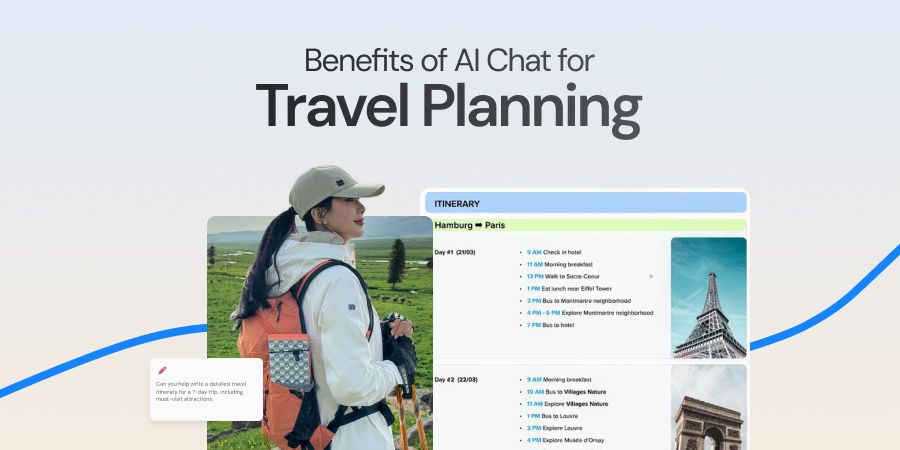
AI chat enhances travel planning by providing personalized recommendations and real-time updates. It streamlines tasks like itinerary creation, booking, and providing tailored travel insights, making the planning process smoother and more efficient.
Personalized Discovery Beyond Traditional Search
AI travel planner systems excel at discovering destinations and experiences that align with your unique preferences. Unlike traditional search methods that rely on popularity or advertising, AI chat considers your specific interests, travel style, and constraints to suggest truly personalized options.
The discovery process becomes conversational and intuitive. Instead of searching through endless lists of "top 10" destinations, you can describe your ideal travel experience and receive suggestions tailored specifically to your preferences.
Personalization Examples:
-
Architecture enthusiasts discover lesser-known Bauhaus sites in Tel Aviv instead of typical European destinations
-
Food lovers find authentic regional cuisines in unexpected locations based on specific dietary preferences
-
Adventure seekers get recommendations for activities matching their exact skill level and risk tolerance
-
Cultural travelers discover festivals and events aligned with their specific interests and travel dates
Time Efficiency and Research Acceleration
Traditional travel planning can consume weeks of research time. AI travel planner systems compress this timeline dramatically while delivering superior results. The efficiency gains allow more time for anticipation and preparation rather than endless research.
Time-Saving Capabilities:
-
Instant Itinerary Generation - Complete trip outlines in minutes instead of days
-
Real-Time Comparison - Simultaneous analysis of multiple options across various factors
-
Automated Research - AI handles the tedious research while you focus on preferences and decisions
-
Continuous Optimization - Ongoing improvements without additional time investment
Budget Optimization and Value Maximization
Smart travelers use trip planning AI to maximize experiences within budget constraints. AI systems excel at finding value opportunities that manual research typically misses.
Budget Intelligence Features:
-
Dynamic Pricing Analysis - Optimal booking timing based on historical price patterns
-
Alternative Suggestions - Comparable experiences at different price points
-
Value Optimization - Spending allocation recommendations for maximum impact
-
Hidden Cost Identification - Anticipation of additional expenses often overlooked in planning
The AI itinerary generator approach ensures budgets work harder by identifying the most impactful ways to allocate travel spending.
Real-Time Adaptability and Problem Resolution
Travel rarely goes exactly as planned. Travel AI planner systems provide ongoing support and adaptation capabilities that transform potential problems into opportunities for enhanced experiences.
Adaptive Planning Benefits:
-
Weather Response - Instant alternative suggestions for weather disruptions
-
Opportunity Capture - Quick plan modifications to capture unexpected opportunities
-
Transportation Changes - Rapid itinerary adjustments for schedule changes
-
Local Insights - Real-time recommendations based on current local conditions
This adaptability transforms rigid itineraries into flexible frameworks that enhance rather than constrain travel experiences.
Choosing the Right AI Travel Planning Platform
The best AI travel planner for your needs depends on travel style, technical comfort, and specific requirements. Understanding platform differences helps identify the optimal solution for your travel planning approach.
Platform Evaluation Criteria:
To analyze and evaluate how you choose a platform to take help in AI-driven travel itinereraries, here's what you can consider.
Conversational Interface Quality:
-
Natural language understanding and response quality
-
Ability to maintain context across extended conversations
-
Flexibility in handling vague or complex requests
-
Learning capability that improves with usage
Data Integration and Accuracy:
-
Real-time pricing and availability information
-
Comprehensive destination and activity databases
-
Integration with booking platforms and services
-
Regular updates reflecting current conditions and trends
Personalization Capabilities:
-
Preference learning and application across recommendations
-
Travel history integration for improved suggestions
-
Customization options for specific travel styles and needs
-
Adaptation based on feedback and experience ratings
Practical Functionality:
-
Mobile accessibility for on-the-go planning and adjustments
-
Offline capability for international travel situations
-
Integration with calendar and booking systems
-
Sharing and collaboration features for group travel
Platforms like Chatly's AI Chat excel in conversational quality and personalization, making them ideal for travelers who prefer natural, dialogue-based planning approaches.
The system's ability to understand context and maintain conversational flow creates planning experiences that feel collaborative rather than transactional.
More AI Travel Planning Strategies for Frequent Travelers
AI-driven travel itinerary planning offers various strategies like dynamic itinerary adjustments and cost-saving recommendations. By analyzing user preferences, AI can suggests optimized routes, accommodations, and activities that align with individual needs and goals.
Multi-Modal Transportation Optimization
AI for trip planning excels at optimizing complex transportation combinations that manual planning struggles to manage effectively. Smart travelers leverage AI to discover transportation options that save time, money, or enhance the overall travel experience.
Examples of Transporation Optimization:
-
Flight + Ground Combinations - AI identifies optimal combinations of flights, trains, and buses for complex routes
-
Alternative Airports - Suggestions for secondary airports that might offer better value or convenience
-
Transportation Experiences - Scenic routes and unique transportation options that become part of the travel experience
-
Timing Optimization - Transportation scheduling that maximizes destination time while minimizing travel fatigue
Seasonal and Event-Based Planning
Leverage travel itinerary generator systems to plan trips around optimal seasonal conditions and special events. AI systems excel at correlating multiple temporal factors for ideal timing recommendations.
Seasonal Planning Considerations:
-
Weather Optimization - Ideal timing for specific activities and experiences
-
Crowd Avoidance - Shoulder seasons that offer great experiences with fewer tourists
-
Cultural Events - Festivals, celebrations, and seasonal traditions that enhance travel experiences
-
Natural Phenomena - Timing for wildlife migrations, flower blooms, or other natural events
Group Travel Coordination
Best trip planner AI systems handle the complexity of group travel coordination, balancing diverse preferences and constraints to create satisfying experiences for all participants.
Group Planning Capabilities:
-
Preference Aggregation - Balancing different interests and travel styles within groups
-
Budget Coordination - Planning within various budget constraints across group members
-
Accessibility Considerations - Ensuring all group members can participate in planned activities
-
Conflict Resolution - Suggesting compromises when group preferences diverge
Sustainable and Responsible Travel Planning
Modern AI travel planner systems increasingly incorporate sustainability and responsible travel principles into their recommendations, helping conscious travelers make informed choices.
Sustainable Travel Features:
-
Carbon Footprint Analysis - Transportation and accommodation choices with environmental impact assessment
-
Local Economic Impact - Prioritizing local businesses and sustainable tourism operators
-
Cultural Sensitivity - Recommendations that respect local customs and minimize cultural impact
-
Off-Season Travel - Suggestions that distribute tourism impact more evenly throughout the year
Common Travel Planning Challenges AI Chat Solves
AI chat eliminates common travel planning hurdles that make these pre, and mid-travel decision making slow. It provides quick answers, automated bookings, and personalized itineraries, allowing travelers to focus more on enjoying their trip.
Information Overload and Decision Paralysis
Traditional travel planning often overwhelms travelers with too many options and conflicting information. Travel planner AI systems filter and prioritize information based on individual preferences, eliminating decision paralysis.
AI Solutions to Information Overload:
-
Personalized Filtering - Only relevant options based on your specific criteria
-
Prioritized Recommendations - Ranked suggestions based on fit with your preferences
-
Contextual Information - Relevant details presented when needed rather than overwhelming data dumps
-
Decision Support - Clear pros and cons for different options to facilitate informed choices
Outdated and Inconsistent Information
Travel information changes constantly, and traditional sources often contain outdated or inconsistent details. AI travel planner systems access real-time data to provide current, accurate information.
Real-Time Information Advantages:
-
Current Pricing - Up-to-date costs for transportation, accommodation, and activities
-
Operational Status - Real-time information about closures, construction, or service changes
-
Seasonal Variations - Current conditions rather than general seasonal information
-
Local Updates - Recent changes in local regulations, customs, or recommendations
Complex Multi-Destination Logistics
Planning trips involving multiple destinations becomes exponentially complex with traditional methods. Trip planner AI systems handle logistics optimization that would be nearly impossible manually.
Multi-Destination Complexity Management:
-
Route Optimization - Efficient routing that minimizes travel time and maximizes experience
-
Transportation Coordination - Complex ticket combinations and schedule management
-
Accommodation Timing - Optimal booking timing across multiple locations
-
Activity Scheduling - Coordinating time-sensitive activities across different destinations
Budget Planning and Cost Prediction
Accurate budget planning challenges even experienced travelers. AI itinerary generator systems provide detailed cost predictions and optimization suggestions for realistic budget planning.
Budget Planning Solutions:
-
Comprehensive Cost Estimation - Including often-overlooked expenses for accurate budgeting
-
Price Trend Analysis - Historical data to predict optimal booking timing
-
Value Optimization - Suggestions for maximizing experiences within budget constraints
-
Emergency Buffer Recommendations - Appropriate contingency planning for unexpected expenses
How Others Are Using AI Chat to Plan Travel Itineraries?
Many travelers and agencies are leveraging AI chat to plan booking processes, build custom itineraries, and gain instant access to local recommendations. Here are a few ways travelers around the world are leveraging AI chat to plan travel itineraries.
Solo Travel Safety and Optimization
Solo travelers benefit enormously from best AI travel planner systems that provide safety insights, social opportunities, and optimized experiences for single travelers.
Solo Travel AI Support:
-
Safety Assessments - Current safety information and risk assessment for solo travelers
-
Social Opportunities - Events, tours, and activities ideal for meeting other travelers
-
Solo-Friendly Accommodations - Hotels, hostels, and alternatives that cater to solo travelers
-
Emergency Planning - Backup plans and emergency contacts for solo travel situations
Case Study Example: A solo female traveler used AI chat to plan a month-long Southeast Asia trip. The system recommended specific neighborhoods in each city known for solo traveler safety, suggested group tours for certain activities, and identified co-working spaces for meeting other digital nomads. The AI also provided country-specific safety tips and local emergency contact information.
Family Travel with Diverse Age Groups
Family travel presents unique challenges balancing different age groups, interests, and energy levels. AI chat systems excel at creating itineraries that satisfy diverse family needs.
Family Travel Optimization:
-
Age-Appropriate Activities - Balancing adult interests with child-friendly options
-
Energy Management - Scheduling that accounts for different energy levels and attention spans
-
Educational Opportunities - Learning experiences that engage different age groups
-
Flexible Scheduling - Built-in flexibility for the unpredictability of family travel
Case Study Example: A family with teenagers and grandparents used AI planning for a European vacation. The system suggested a home base approach with day trips, balancing historical sites interesting to grandparents, adventure activities for teens, and cultural experiences for parents. The AI recommended specific times for each activity based on crowd levels and energy requirements.
Business Travel Optimization ( Future Integration Possibilities)
Business travelers use AI for trip planning to maximize efficiency and minimize stress while maintaining work productivity during travel.
Business Travel AI Features:
-
Meeting Integration - Scheduling around business commitments and travel time
-
Productivity Optimization - Accommodations and locations that support work requirements
-
Stress Minimization - Efficient routing and realistic timing to reduce travel stress
-
Expense Management - Budget-conscious recommendations that meet company travel policies
Adventure and Outdoor Travel Planning
Adventure travelers leverage AI travel planner systems to plan complex outdoor experiences requiring specialized knowledge and safety considerations.
Adventure Travel Planning:
-
Skill Level Matching - Activities appropriate for specific experience and fitness levels
-
Safety Planning - Risk assessment and emergency planning for outdoor activities
-
Equipment Coordination - Gear recommendations and rental opportunities
-
Weather Dependency - Alternative planning for weather-dependent activities
How to Know If Your AI Travel Itinerary Was Worth It?
Quantitative Success Metrics
Travel itinerary success can be measured through specific, quantifiable improvements in travel experiences and planning efficiency.
Key Performance Indicators:
-
Planning Time Reduction - Hours saved compared to traditional planning methods
-
Budget Accuracy - Actual costs versus AI predictions and recommendations
-
Experience Satisfaction - Ratings of recommended activities and accommodations
-
Itinerary Completion - Percentage of planned activities successfully completed
Typical Improvements with AI Planning:
-
Time Savings - 70-80% reduction in planning time for comparable itinerary quality
-
Budget Optimization - 15-25% better value through smarter spending allocation
-
Experience Quality - Higher satisfaction rates through personalized recommendations
-
Stress Reduction - Measurable improvement in travel stress and enjoyment
Qualitative Experience Enhancements
Beyond quantitative metrics, best AI travel planner systems deliver qualitative improvements that enhance overall travel satisfaction.
Qualitative Benefits:
-
Discovery of Hidden Gems - Unique experiences unlikely to be found through traditional planning
-
Cultural Authenticity - More authentic local experiences and interactions
-
Reduced Decision Fatigue - Less mental energy spent on planning decisions
-
Increased Spontaneity - Framework planning that allows for spontaneous opportunities
Long-Term Travel Pattern Improvements
AI travel planner systems improve travel patterns over time, learning from experiences to deliver increasingly personalized recommendations.
Pattern Improvement Examples:
-
Preference Refinement - Increasingly accurate understanding of personal travel preferences
-
Destination Discovery - Expanding travel horizons through AI-suggested destinations
-
Travel Style Evolution - Supporting changes in travel style and interests over time
-
Efficiency Gains - Continuous improvement in planning and execution efficiency
Getting Started with AI Travel Planning
Starting with travel itinerary planning is often not simple, but with AI chat assistance, these tasks become as easy as chatting to a knowledgeable traveler friend.
You can set preferences for your trip, and let the AI chat model handle the complex planning tasks like route optimization and activity suggestions.
Initial Setup and Preference Configuration
Beginning your trip planning journey with AI systems requires thoughtful setup and preference configuration for optimal results.
Setup Best Practices:
-
Detailed Preference Input - Comprehensive information about travel style, interests, and constraints
-
Historical Travel Analysis - Input past travel experiences and satisfaction levels
-
Constraint Documentation - Clear communication of budget, time, and accessibility requirements
-
Goal Definition - Specific objectives for different types of travel experiences
Start with platforms like Chatly's AI Chat that prioritize conversational setup, allowing natural discussion of preferences rather than complex checklists, enabling access to multiple top AI models.
Building AI Travel Planning Expertise
Travel planner AI systems become more effective as users develop skills in communicating with AI and interpreting recommendations.
Skill Development Areas:
-
Question Formulation - Learning to ask specific, actionable questions that generate useful responses
-
Preference Communication - Effectively describing travel style, interests, and constraints
-
Recommendation Evaluation - Developing judgment about which AI suggestions align with personal preferences
-
Iterative Planning - Using AI feedback loops to refine and improve travel plans
Integration with Existing Travel Tools
Smart travelers leverage AI itinerary generator systems within Chatly’s AI chat, with existing travel tools and workflows for comprehensive travel management.
Integration Strategies:
-
Calendar Synchronization - Connecting AI planning with personal and work calendars
-
Booking Platform Coordination - Using AI recommendations with preferred booking sites
-
Document Management - Organizing AI-generated itineraries with travel documents
-
Mobile Accessibility - Ensuring AI access during travel for real-time adjustments
The Future of AI Travel Planning with Chatly’s AI Chat
AI travel planning is evolving, offering even smarter solutions such as updated travel experiences and hyper-personalized itineraries. As AI continues to advance, it will revolutionize how travelers plan, book, and experience their trips, making travel more accessible and enjoyable.
With AI Chat by Chatly, travelers and explorers can already leverage top AI models to plan details and super-specific itineraries, and make their experiences hassle-free.
Emerging Technologies and Capabilities
The AI travel planner landscape continues evolving rapidly, with emerging technologies promising even more sophisticated travel planning capabilities.
Technological Developments:
-
Augmented Reality Integration - AI recommendations overlaid on real-world locations
-
Predictive Personalization - AI systems that anticipate preferences before they're expressed
-
Voice-Activated Planning - Hands-free travel planning through voice interfaces
-
Real-Time Sentiment Analysis - AI that adjusts recommendations based on traveler mood and energy
Industry Integration and Standardization
Google AI travel planner and similar platforms are driving industry-wide integration that will create seamless travel planning ecosystems.
Integration Trends:
-
Universal Booking Integration - Single-interface booking across all travel services
-
Real-Time Inventory Management - Instant availability and pricing across global suppliers
-
Standardized Review Systems - Consistent quality assessment across different platforms
-
Collaborative Planning Tools - Enhanced group planning and decision-making capabilities
Sustainable and Responsible Travel Focus
Future best AI travel planner systems will increasingly prioritize sustainability and responsible travel practices as core features rather than optional considerations.
Sustainability Integration:
-
Carbon Footprint Optimization - Automatic consideration of environmental impact in all recommendations
-
Local Economic Impact - Prioritizing recommendations that benefit local communities
-
Cultural Sensitivity - Built-in cultural awareness and respect protocols
-
Overtourism Prevention - AI systems that help distribute tourist impact more evenly
The future belongs to travelers who embrace AI as a collaborative planning partner. AI travel planner systems like Chatly's AI Chat represent just the beginning of a travel planning revolution that will continue transforming how we discover, plan, and experience the world.
Success with AI travel planning requires viewing these systems as sophisticated tools that amplify human creativity and preferences rather than replace human judgment.
The most successful travelers combine AI efficiency with personal intuition to create travel experiences that are both optimized and authentically personal.
Your next adventure is one conversation away. Start exploring the possibilities of AI-powered travel planning and discover how technology can transform your travel dreams into perfectly planned realities._
Frequently Asked Questions About AI Travel Planning
Still have questions about AI-powered travel itinerary planning? Read the most common questions we get around this use case of AI Chat.
More topics you may like
11 Best ChatGPT Alternatives in 2026 (Tested, Compared & Priced)

Muhammad Bin Habib

How to Use AI Chat for Influencer Campaigns in 2025
Muhammad Bin Habib
How to Write Cultural Analysis Essays Using AI Chat

Faisal Saeed
How AI Chat Helps with Survey & Feedback Collection
Muhammad Bin Habib

24/7 Customer Support with AI Chat: Benefits, Examples and More
Muhammad Bin Habib