China Orders Meta to Unwind $2 Billion Manus AI Acquisition in Unprecedented Cross-Border Move
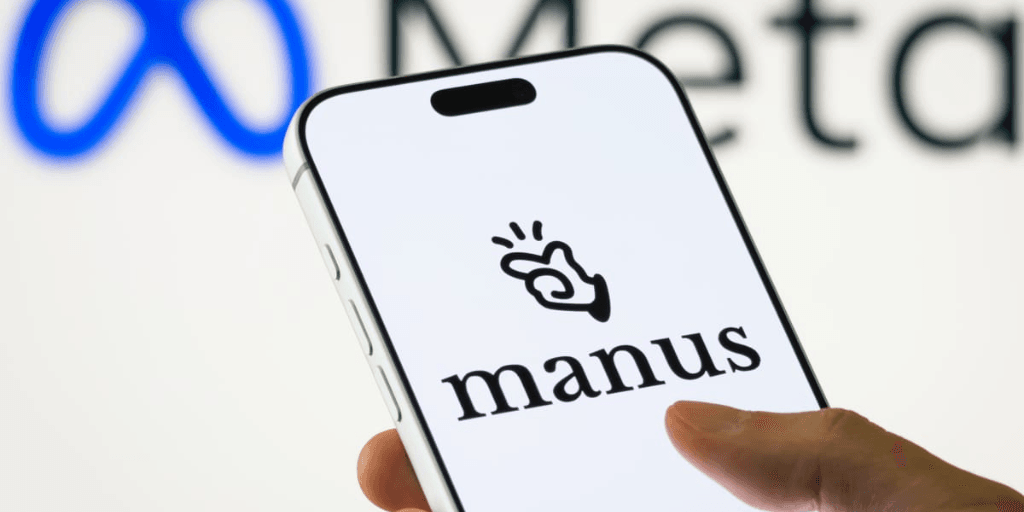
China's National Development and Reform Commission (NDRC) ordered Meta on Monday to reverse its $2 billion acquisition of Manus AI, a Singapore-based AI agent startup with Chinese roots. The NDRC issued a brief statement saying it had decided to prohibit the foreign acquisition of the Manus project in accordance with laws and regulations and required all parties to withdraw the transaction.
A Meta spokesperson told the BBC, "The transaction complied fully with applicable law". "We anticipate an appropriate resolution to the inquiry," they added. The White House said it would continue defending America's leading technology sector against undue foreign interference.
What Manus Is and Why It Attracted Meta
Founded in 2022 in Beijing by Xiao Hong, Ji Yichao, and Tao Zhang under parent company Butterfly Effect, Manus officially launched on March 6, 2025, as a general-purpose AI agent that autonomously plans, executes, and delivers results for complex multi-step tasks without continuous human supervision.
Its capabilities include:
- Writing research reports, preparing presentations, and building websites end-to-end
- Browsing the web, executing scripts, and interacting with APIs independently
- Operating asynchronously in the background without requiring user oversight
- Outperforming OpenAI's Deep Research agent across all difficulty levels in GAIA benchmark tests
When Meta announced the acquisition in December 2025, it planned to fold Manus's agent technology directly into Meta AI to accelerate autonomous AI capabilities across its consumer and enterprise products. TechCrunch reported the deal was valued between $2 billion and $3 billion.
How the Deal Unraveled
The acquisition drew scrutiny from both Washington and Beijing almost immediately after it was announced:
- May 2025: U.S. venture firm Benchmark led a $75 million Series B in Manus. The U.S. Treasury Department opened an investigation to determine if the investment violated outbound investment laws. Senator John Cornyn raised concerns about American capital flowing to a Chinese-linked firm.
- Mid-2025: Manus shut its Beijing offices, relocated engineers to Singapore, and reincorporated as a Singaporean entity under a practice analysts call "Singapore washing."
- December 2025: Meta announced the acquisition. According to the Financial Times, the NDRC had initially approved Manus's Singapore relocation, but complications arose when Meta and Manus failed to notify Chinese authorities before finalizing the deal.
- January 2026: China's Ministry of Commerce launched an investigation into compliance with export control and overseas investment laws
- March 2026: The NDRC summoned co-founders Xiao Hong and Ji Yichao to Beijing and barred them from leaving China pending the review
- April 27, 2026: The NDRC issued its decision ordering both parties to unwind the transaction
The Problem of Unwinding a Completed Deal
By the time of the ruling, the integration was already well underway:
- Manus employees had moved into Meta's offices in Singapore.
- Manus executives had joined Meta's AI team.
- Manus had already shared its code with Meta, and it had been incorporated into Meta's services.
- Investors, including Tencent Holdings, ZhenFund, and HongShan, had already received their payouts.
Bloomberg reported that forcing founders and investors to return money to Meta risks giving the American company access to critical technology for free, with no meaningful reversal of the integration that has already taken place.
What This Signals for the Broader AI Industry
Al Jazeera reported that this is the first major test of whether China's 2020 national security review mechanism can reach firms that have legally shifted operations overseas. That mechanism was designed for Chinese-founded firms operating within China, and its extraterritorial reach has never been tested at this scale.
Stefanie Kam, assistant professor at Singapore's Nanyang Technological University, said the Manus incident exposes uncertainty around what actually moves offshore when a Chinese AI company relocates. Lizzi Lee, a fellow at the Asia Society Policy Institute's Center for China Analysis, said Beijing is now treating AI as critical national infrastructure rather than commercial technology.
President Trump and Chinese leader Xi Jinping are expected to meet in Beijing next month, where AI will be among the agenda items discussed.
Also Read
- Google Commits Up to $40 Billion in Anthropic as Tech Giants Race to Lock In AI Infrastructure
- OpenAI Closes Record $122 Billion Funding Round at $852 Billion Valuation
- Trump Says Meta's Louisiana AI Data Center to Cost $50B
- DeepSeek V3.1 Hybrid Reasoning Model Released
- Microsoft Copilot Adds Multi-Model AI Comparison
Frequently Asked Questions
What you need to know about China blocking Meta's Manus acquisition
More topics you may like
China Bans Its Tech Firms from Buying Nvidia AI Chips

Muhammad Bin Habib

Anthropic Launches Claude AI Agent Inside Chrome
Muhammad Bin Habib
NVIDIA-Backed UK AI Firm nScale Secures $1.1B in Funding to Expand Global Reach
Muhammad Bin Habib

NVIDIA Launches “Ising”, the World's First Open AI Models for Quantum Computing

Arooj Ishtiaq
Meta secures Midjourney’s creativity for its AI roadmap
Muhammad Bin Habib